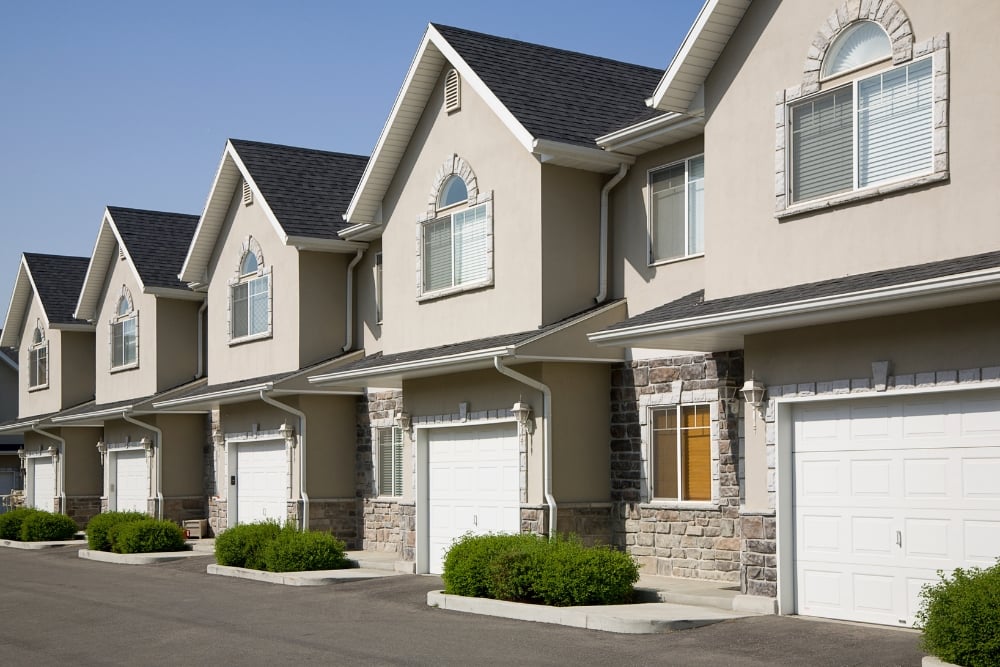
Duplexes and townhouses sit in their own category when it comes to garage doors. They’re not apartments, so the strata rules that govern common property don’t always apply. But they’re not freestanding homes either, so you can’t always make changes without checking what your neighbours, your developer covenant, or your community title scheme has to say about it.
If you’re building, buying, or renovating a duplex or townhouse in the Hunter or on the Central Coast, here’s what’s worth thinking through before you commit to a door.
Understanding your title type first
The first thing to establish is how your property is titled, because that determines what constraints exist on your garage door choice.
A duplex on a Torrens title (also called a community title or a lot on a deposited plan) means both dwellings sit on separate land parcels. There’s no owners corporation involved. Each owner makes their own decisions about their property, subject to council requirements and any deed of agreement between the two lots.
A duplex or townhouse on a strata title is different. The owners corporation governs common property, which may include external walls, driveways, and in some cases the garage structure itself. The approval process for any changes is the same as for a standard strata scheme, which we covered in our post on strata garage door requirements.
Community title schemes fall somewhere in between. There’s a shared association managing common areas, but individual lots have more autonomy than in a strata scheme. By-laws still apply and changes to the external appearance of a dwelling often require association approval.
Here’s the key point: before you choose a door, know your title type. Torrens title gives you the most freedom. Strata title gives you the least. Community title sits in the middle.
Developer covenants and design guidelines
Many newer duplex and townhouse developments in the Hunter region, particularly in estates across areas like Cameron Park, Thornton, and Chisholm, come with developer covenants or design guidelines that restrict what you can do to the exterior of your property. These covenants are registered on the title and run with the land, meaning they apply to every future owner, not just the original buyer.
Common restrictions include door style (sectional panel doors only, no roller doors visible from the street), colour range (matching or complementing the facade palette), and material (no timber or timber-look finishes in some estates, or the opposite in others).
Breaking a covenant isn’t a criminal matter but it can result in a neighbour or the original developer seeking an injunction to have the work reversed. Getting it right upfront is considerably cheaper than undoing a non-compliant installation.
When we do a site assessment, we check for any covenant conditions that affect the door specification before we recommend anything. It’s part of the process, not an afterthought.
Here’s the key point: developer covenants are registered on title and are legally enforceable. Check them before you choose a style, colour, or material. Your conveyancer or the original contract of sale will have a copy.

The shared boundary question in duplexes
In a duplex, the two dwellings share a wall. In many configurations, the garages sit side by side, meaning the opening to each garage is immediately adjacent to the neighbours. This creates a few practical considerations that don’t arise in a detached home.
Noise travels. A chain-drive opener at 6am will be heard through a shared wall far more clearly than it would be in a freestanding home. If you’re installing a new opener in a duplex, a belt-drive or DC motor unit is worth the extra cost. The difference in operating noise is significant, and you’ll be on much better terms with the person next door.
Door swing and clearance matters too. Tilt doors extend outward before lifting, which can cause clearance issues where two garage openings sit very close together. In most duplex configurations a sectional door, which lifts straight up and back, is the safer choice from a clearance standpoint.
If both sides of the duplex need new doors at the same time, which is common when a duplex is sold or renovated, it’s usually worth co-ordinating the installation so both doors match. A mismatched pair can affect kerb appeal and, in some cases, trigger covenant or council requirements about visual consistency.
Here’s the key point: in a duplex, your garage door choice affects your neighbour more directly than in a detached home. Noise, clearance, and visual consistency are all worth discussing before you decide.
Townhouse-specific considerations
Townhouses typically have less lot width to work with than a duplex, and garages are often integral to the building structure rather than attached. That affects both the door type and the installation process.
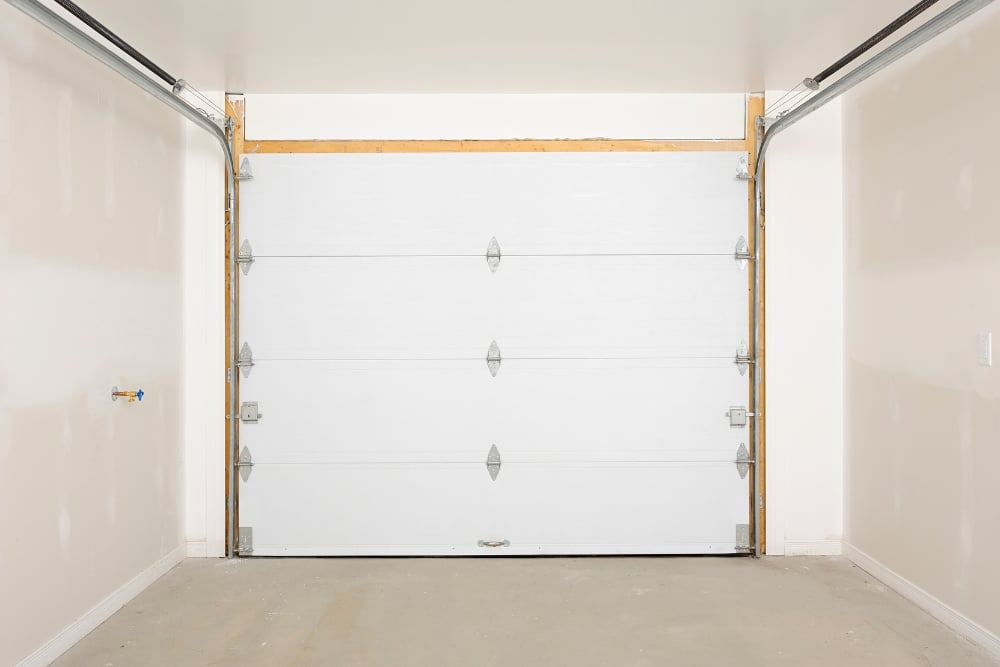
Overhead clearance can be limited in older townhouse designs. If the ceiling inside the garage is low, a standard sectional door may not have enough room to track back into the roof space. A low-headroom sectional door system, or in some cases a tilt door, may be the better fit. We measure this during the site assessment.
Many townhouse developments also share a common driveway or internal road. Access to that driveway is often managed by a body corporate or owners corporation, which means any door that opens outward needs to account for pedestrian and vehicle traffic in a shared space.
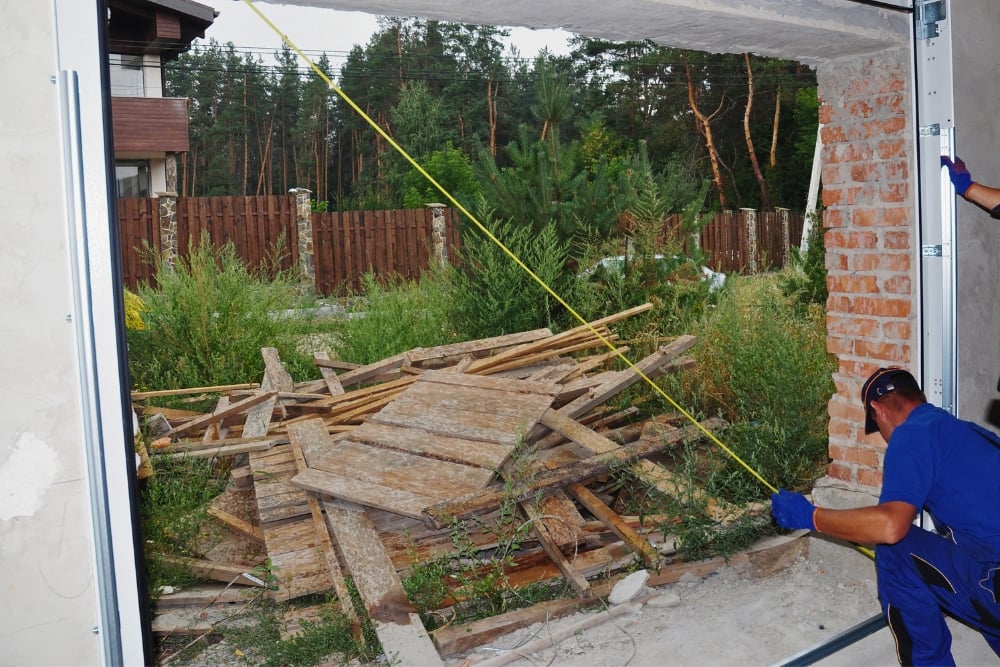
For new townhouse builds or significant renovations, proper garage door installation takes into account the building structure, any overhead obstructions, and how the door integrates with the facade before a single component is ordered. Getting those measurements and specifications right at the start avoids costly adjustments once the frame is in.
Here’s the key point: townhouse garages often have less clearance and more structural constraints than a freestanding home. A site assessment before ordering avoids the wrong door arriving on the wrong job.
When both dwellings need new doors
It’s common, particularly with older duplexes, for both doors to reach the end of their life around the same time. Replacing them together has some clear advantages.
You get visual consistency across the facade without having to negotiate it with a neighbour after the fact. You can co-ordinate installation in a single visit rather than two separate jobs. And if the driveway or access needs to be partially blocked during installation, doing both at once minimises disruption.
We can quote both doors as a combined job. If the two owners want different products, that’s fine too. The main thing is that the external appearance is co-ordinated so neither party ends up with a mismatched frontage.
Here’s the key point: if both sides of a duplex need new doors, doing them together is simpler and usually cheaper. It also avoids the awkward conversation about matching colours after one side has already been installed.
Frequently asked questions
Do I need council approval to replace a garage door on a townhouse?
In most cases, no. Replacing a like-for-like door on a residential property in NSW generally doesn’t require a development application. However, if you’re changing the size of the opening, altering the facade significantly, or the property is heritage-listed, council approval may apply. Check with your local council if you’re unsure. Developer covenants are separate to council requirements, and both need to be considered.
Can I change my garage door colour without asking anyone?
On a Torrens-titled duplex with no covenant restrictions, yes. On a strata or community title property, the external appearance of your dwelling generally needs approval before changes are made. On any property with a registered covenant, the colour restrictions in that covenant apply regardless of title type.
What door type works best for a townhouse with limited headroom?
A low-headroom sectional door system is usually the best option where ceiling height inside the garage is restricted. Some tilt door configurations also work in low-clearance situations. The right choice depends on the exact measurements, which we assess on-site before making a recommendation.
We own both sides of the duplex. Does that change anything?
It simplifies the co-ordination, but the same covenant and council rules apply. If there’s a registered covenant on the title of either lot, it still needs to be followed even if you own both properties.
How long does a garage door installation take for a duplex?
A single door replacement typically takes 2 to 4 hours including removal of the old door, installation, and testing. Two doors on the same day are usually completed within a full working day depending on the door type and any additional work required, such as motor installation or track modifications.
Not sure what’s right for your duplex or townhouse?
We work across Newcastle, Lake Macquarie, Hunter Valley, Port Stephens, and the Central Coast. Whether you need a single door replaced or both sides of a duplex sorted at once, we’ll come out, take the measurements, check any covenant conditions, and give you a straight quote before anything is ordered.
Call us on 02 4955 3332 or send an enquiry through our website.