Replacing a garage door spring involves identifying the type of spring, safely releasing its tension, removing the old part, installing the correct replacement, and testing the door for balance and smooth operation.
The problem is that these springs hold a large amount of tension, making them hazardous if handled without the right tools and experience. Attempting this repair on your own can lead to serious injury or further damage to the door.
The safe solution is to have a qualified technician carry out the replacement, following strict procedures to restore reliable and secure function.
Identifying the Spring
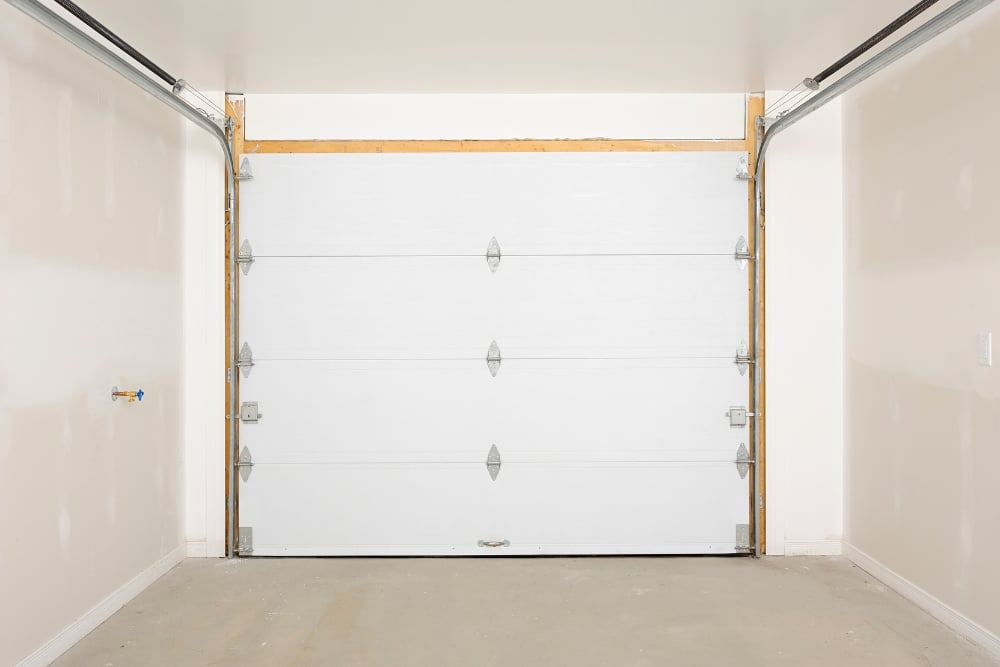
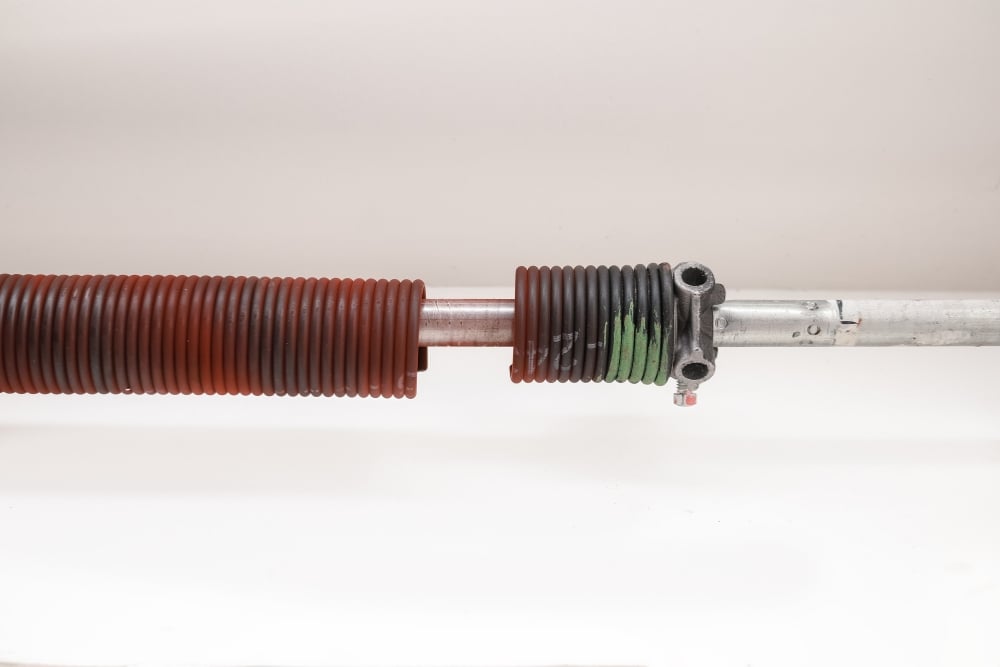
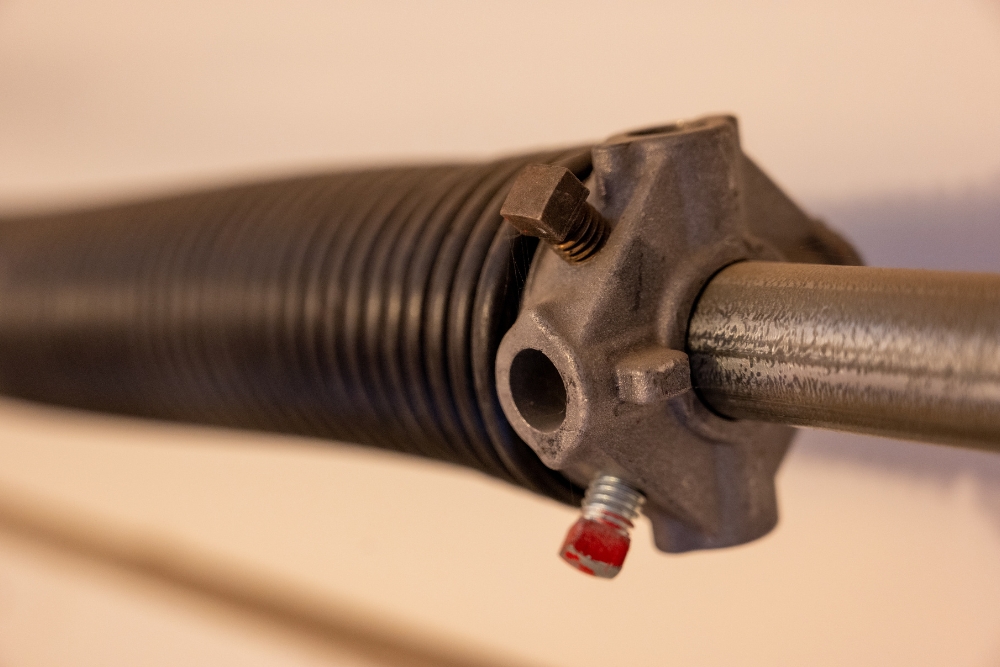
The first step in replacing a garage door spring is determining which type is fitted. Garage doors use either torsion springs or extension springs. Torsion springs are mounted above the door and unwind under controlled tension, while extension springs run along the tracks and stretch when the door moves.
Each type requires a different replacement process. Using the wrong method or part can lead to poor operation and create safety risks.
Technicians select a spring that matches the door’s weight and size. A mismatched spring may prevent the door from staying balanced or cause the opener to work harder than intended, reducing its lifespan.
Correct identification ensures the replacement process is both safe and effective. For homeowners, this step highlights why expert assessment is important before any work begins.
Safety Preparation
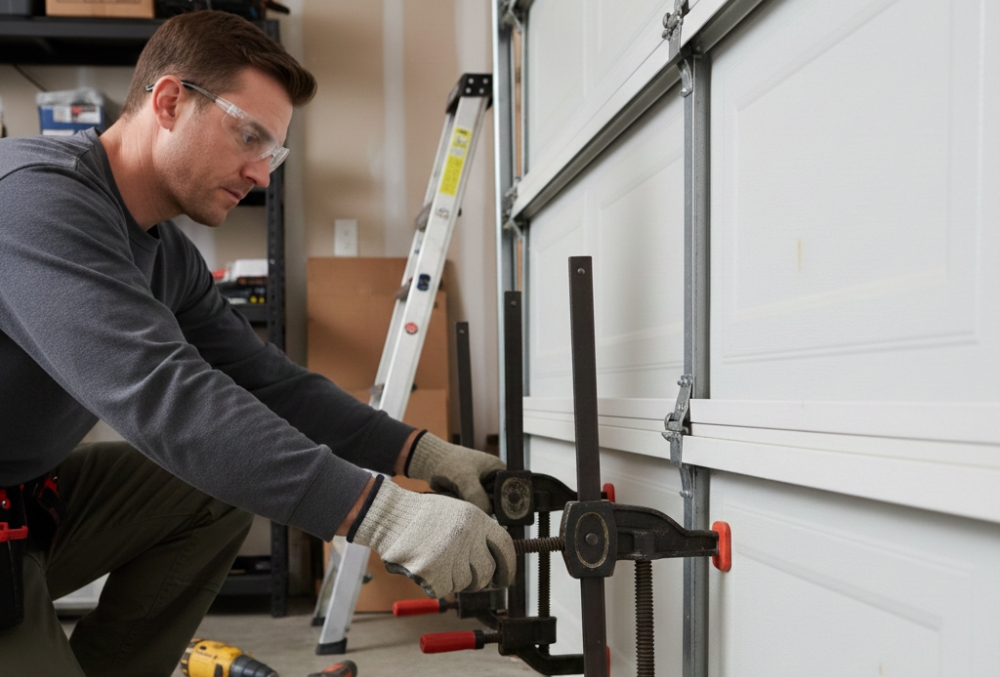
Before replacing a garage door spring, safety steps must be taken to prevent accidents. The door opener is disconnected so the motor cannot engage, and the door is clamped in place to stop sudden movement. Springs hold significant tension, and without proper control, they can release force strong enough to cause serious injury.
Technicians use protective equipment and winding bars to handle the spring safely. These tools allow controlled release of pressure and reduce the risk of the spring snapping. Skipping these precautions can damage the door or place anyone nearby in danger.
This preparation stage ensures that the replacement can be carried out in a controlled and secure manner.
Removing and Installing Springs
Once the door is secured, the old spring is removed. For torsion systems, the spring tension is carefully unwound using winding bars before the spring is unbolted and detached from the shaft.
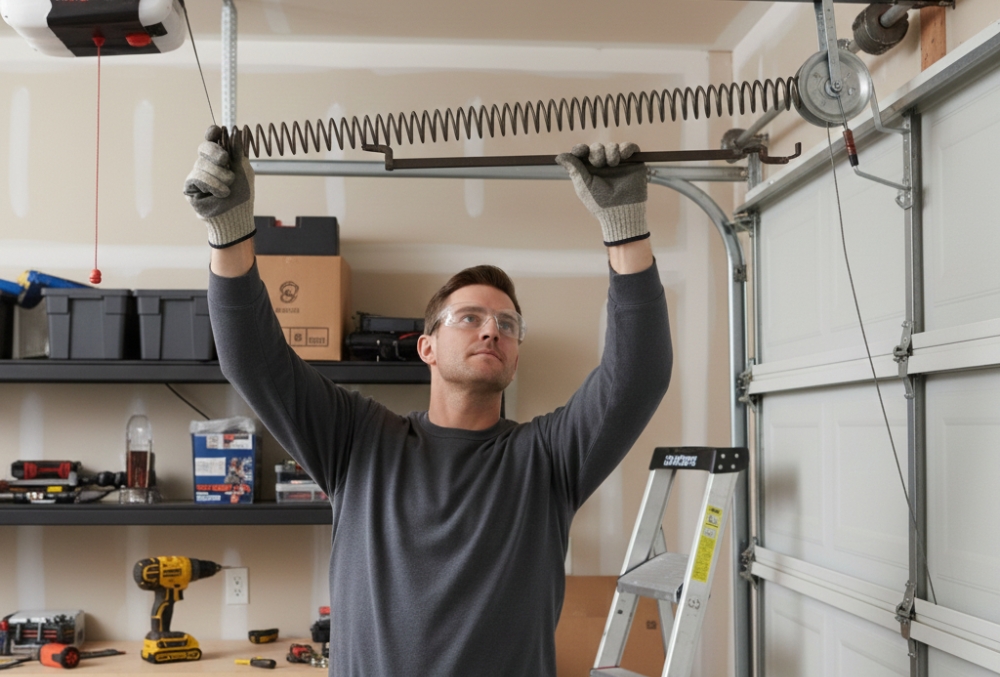
For extension systems, the door is opened to release pressure, and the cables and brackets are disconnected to remove the spring. Both methods require accuracy, as even small mistakes can affect the balance of the door.
Installation involves fitting a replacement spring that matches the door’s weight and size. A torsion spring is mounted, bolted in place, and wound to the correct tension. An extension spring is attached to the brackets, connected with safety cables, and adjusted for proper movement.
Using the wrong size spring or setting the wrong tension can place strain on the opener and reduce the lifespan of the system. This stage ensures the door operates smoothly and safely once back in use.
Testing and Final Adjustments
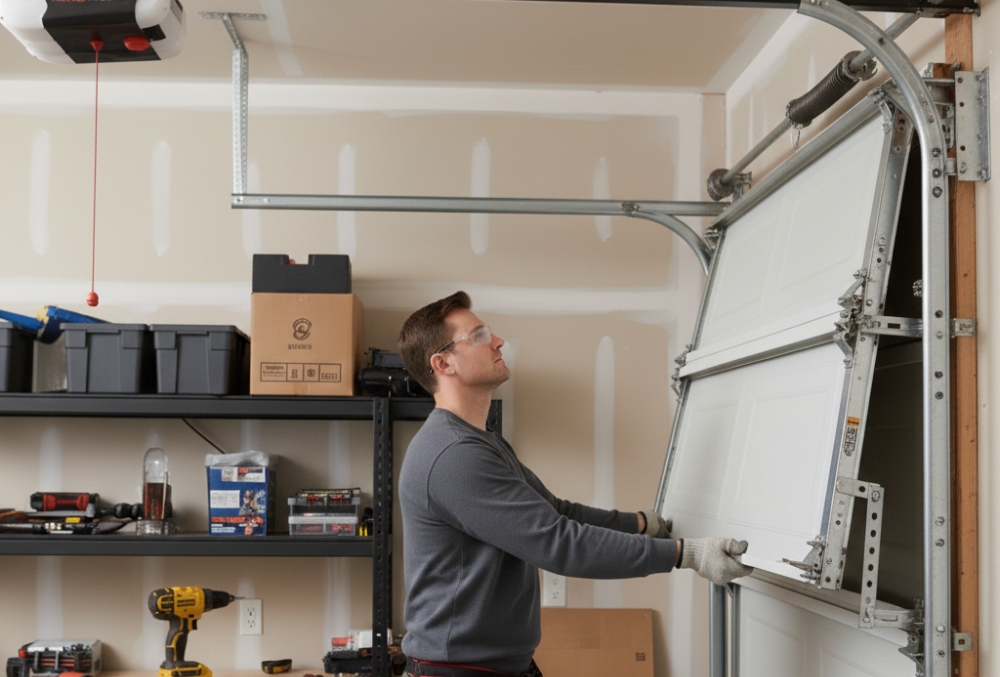
After the new spring is installed, the door is tested manually. It should lift smoothly, stay in place when partly open, and close without sudden drops. If the door feels heavy or moves unevenly, the tension is adjusted until balance is restored. These checks confirm that the spring is set correctly and that the door operates as intended.
Once balance is achieved, the opener is reconnected. Safety features such as the auto-reverse function are tested to make sure the door stops or reverses if something blocks its path. Final adjustments may be needed to reduce strain on the motor and keep the door aligned with the tracks.
This step is essential because an unbalanced door can wear out components quickly and pose safety risks. Regular servicing after replacement also helps extend the lifespan of the entire system.
FAQs on Garage Door Springs
How often should springs be checked?
Springs should be inspected at least once a year during routine garage door servicing. Early checks help detect wear before failure.
What happens if a spring breaks suddenly?
The door may slam shut or become too heavy to lift. In this case, the door should not be forced open and a technician should be called immediately.
Can worn springs damage the opener?
Yes. A weak or unbalanced spring makes the motor work harder, which can cause early breakdown or shorten its lifespan.
Do different doors use different springs?
Yes. The size and weight of the door determine the spring type and size needed. Using the wrong spring creates safety risks and poor performance.
Is there maintenance that extends spring life?
Lubricating the springs and scheduling regular servicing can reduce friction, helping the springs last longer.
Professional Help for Garage Door Spring Replacement
A broken or unbalanced spring does more than interrupt daily access — it increases the risk of damage to the door and safety hazards around the home. Leaving the issue unresolved often leads to greater repair costs, while attempting the work without training can cause serious injury.
The practical solution is to call the local team at Coast to Valley Garage Doors. We provide prompt garage door repairs for springs, cables, and openers. Our technicians follow strict safety steps, install the correct replacement parts, and make final adjustments so the door runs smoothly and securely.
With professional support, homeowners gain reliable repairs and the confidence that their garage door has been restored to safe working order.