If your garage door sounds like a freight train passing through your living room every time you get home, you aren’t alone. It is one of the most common complaints we hear from homeowners across the Central Coast and Hunter Valley. While no door is completely silent, a healthy garage door shouldn’t be waking up the neighbours or vibrating the pictures off your hallway walls.
The level of noise usually comes down to three things: the type of opener you have, the material of the door, and how long it’s been since a professional last looked at it.
Why Is My Garage Door So Loud?
Most of the time, that rattling or grinding noise isn’t just an annoyance; it is the door telling you something is wrong. Here are the usual suspects:
- Metal-on-metal friction: If the rollers are worn out or the tracks are dry, you’ll hear a high-pitched squeak or a grinding sound.
- Worn out bearings: A vibrating or rumbling sound often means the bearings in the motor or the end plates are starting to fail.
- Loose hardware: Over time, the nuts and bolts holding the tracks and hinges together can vibrate loose. This creates a rhythmic rattling sound as the door moves.
- Chain drive openers: Older style openers use a metal chain (like a bike chain) to pull the door. These are notoriously noisy compared to modern alternatives.
Belt Drive vs. Chain Drive
If silence is your priority, the biggest upgrade you can make is switching to a belt-drive motor. Instead of a noisy metal chain, these use a reinforced rubber belt. They are significantly quieter and smoother. If your garage is located directly under a bedroom or right next to the lounge room, a belt drive is almost a necessity for a bit of peace and quiet.
The Importance of Regular Servicing
A lot of people treat their garage door like a set and forget appliance. In reality, it is the largest moving part in your home and it’s under a massive amount of tension.
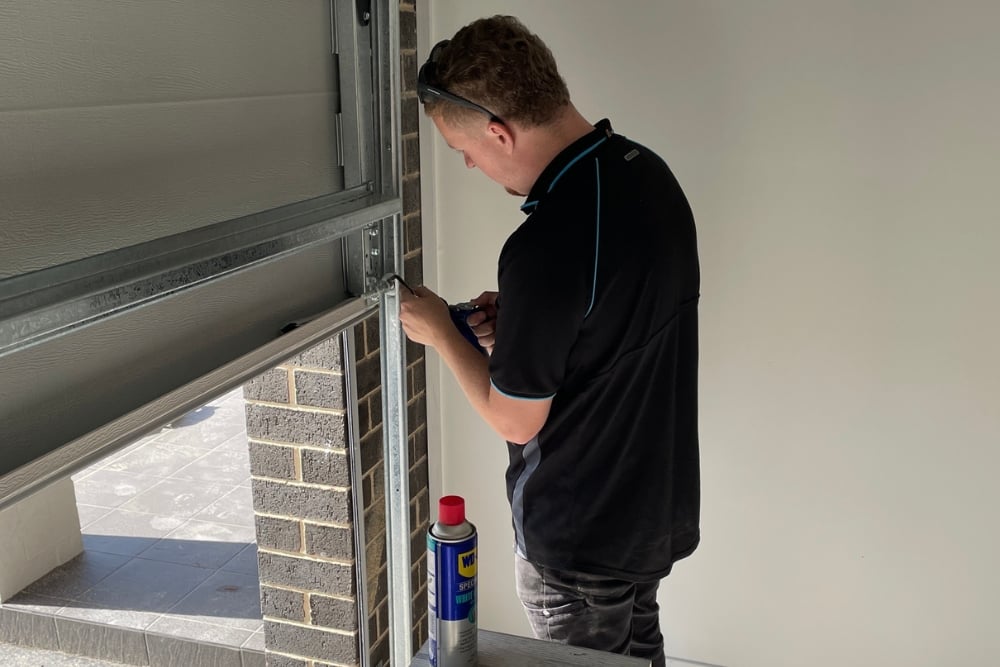
Just like a car, it needs regular attention to keep running quietly. We usually find that a simple professional service can reduce noise by 50% or more. This involves tightening all the hardware, aligning the tracks, and using the right lubricants on the springs and rollers.
If you haven’t had yours looked at in a while, it’s worth checking out our servicing and maintenance options. Getting it sorted now usually prevents a much more expensive repair down the track when a worn part finally snaps.
Quick Fixes You Can Do Yourself
While you should never touch the high-tension springs (they’re dangerous), you can do a few things to quieten things down:
- Check for loose bolts: If you see a hinge or bracket that looks a bit shaky, give it a quick nip with a spanner.
- Clean the tracks: Use a damp rag to wipe out any grit or old grease from the inside of the tracks.
- Don’t use WD-40: This is a big one. People often spray WD-40 on their tracks, but it attracts dust and turns into a sticky paste that makes the noise worse. Use a proper silicone-based or lithium lubricant instead.
Still sounding rough?
If you’ve tried a bit of DIY and the door is still screeching or shuddering, it might be time for an expert to check the balance and the motor. We’ve been helping locals across Newcastle and the Valley for years, and we know exactly what to look for to get a door running smoothly again.
You can contact us here to book a time, or if it’s an urgent noise that sounds like the door is about to fail, call us on 02 4955 3332.