You press the button, the door starts moving, then it stops and goes back the other way. Maybe it reverses before it fully closes, or it opens a few centimetres and retreats. It’s frustrating, and it usually means one of a handful of things is going on.
Here’s how to work through it.
The Safety Sensors are the First Thing to Check
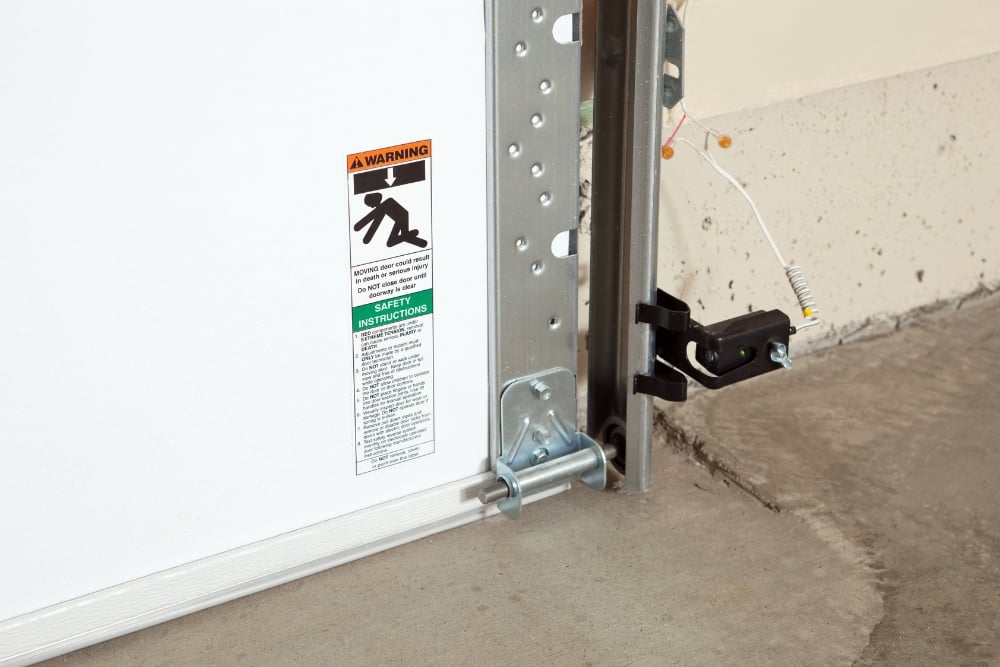
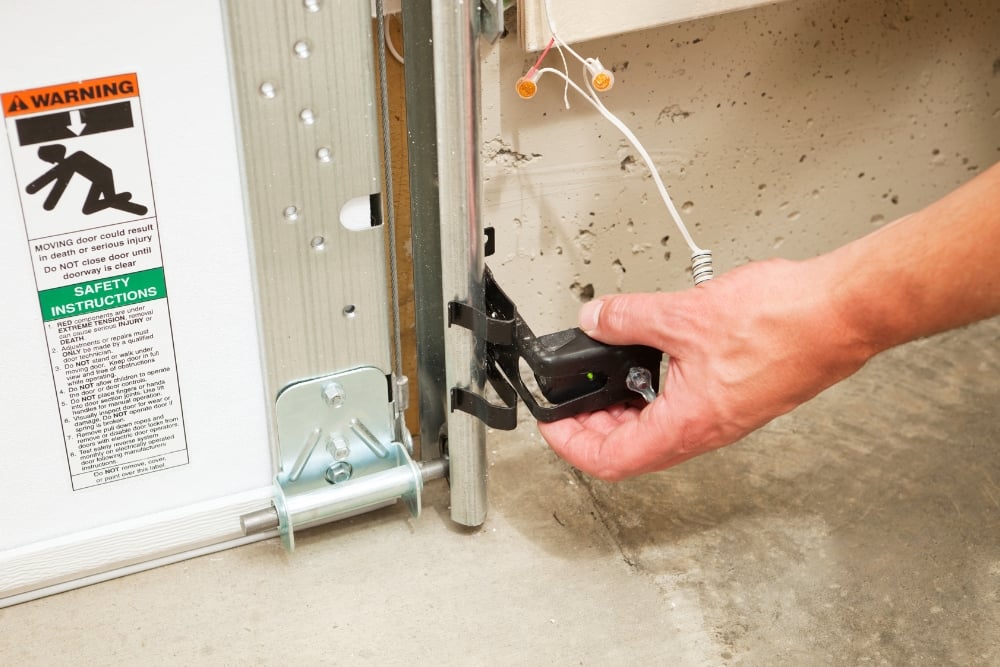
Modern garage doors have two small sensors sitting about 150mm off the ground, one on each side of the door opening. They send an invisible beam across the gap. If anything breaks that beam while the door is closing, the door reverses. That’s the system working exactly as it should.
But the sensors can also cause false reversals when nothing is actually in the way.
Check for obstructions first. A bin, a garden hose, a bag leaning against the wall. It sounds obvious but it’s the most common cause and the easiest fix.
Look at the indicator lights. Each sensor unit has a small LED. One should be solid green (sending), the other solid amber (receiving). If either light is off, blinking, or flickering, the sensors aren’t aligned or something is interfering with the beam.
Clean the sensor lenses. Dust, dirt, and cobwebs on the sensor lens can scatter the beam enough to trigger a false reversal. Wipe them with a dry cloth.
Check alignment. If a sensor has been knocked out of position (by a bin, a bike, a kid), the beam won’t connect cleanly. Loosen the wing nut, adjust the sensor until both LEDs show solid, and retighten.
Direct sunlight. Low afternoon sun shining directly into a sensor can overwhelm it and cause reversals. If this only happens at certain times of day, that’s likely your problem. A small shade (a piece of cardboard taped above the sensor) can fix it while you work out a longer-term solution.
The Travel Limits are Set Wrong
Your garage door opener has settings that tell the motor how far the door should travel in each direction. These are called the travel limits, or limit switches.
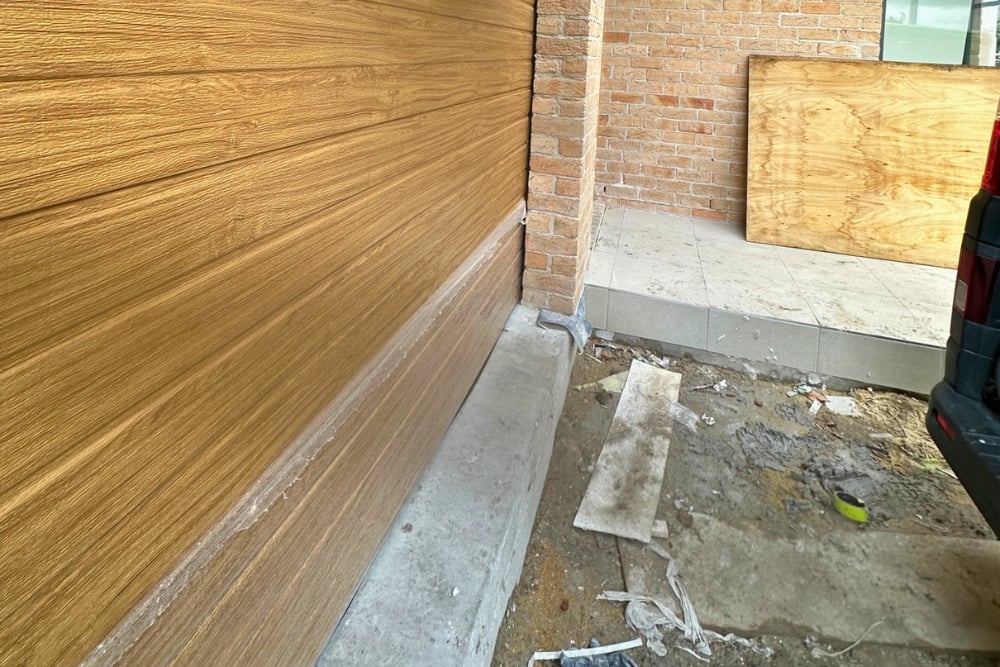
If the close limit is set too far, the door will hit the ground and the motor will interpret that resistance as an obstruction and reverse. It’s a safety mechanism doing its job, but triggered by incorrect settings rather than an actual obstruction.
Signs the close limit is the problem:
- The door reverses at the same point every time
- It gets close to the floor but reverses just before it seals
- Or it actually touches the ground briefly before bouncing back
The adjustment process varies depending on your opener brand and model. Most older openers have two dials or screws on the motor unit labelled “UP” and “DOWN” (or “Open” and “Close”). Turning them in small increments adjusts the travel distance. Your opener manual will have the specifics.
If you’ve lost the manual, the brand and model number are usually on a sticker on the motor unit. Most manufacturers have PDFs online.
The Force Settings Need Adjusting
Separate from the travel limits, most openers also have force (or sensitivity) settings that control how much resistance the motor will tolerate before it decides something is wrong and reverses.
If the force is set too low, the door reverses at the slightest friction. If it’s set too high, the safety reversal feature becomes less effective.
A simple test: when the door is closing, place a piece of 40mm timber flat on the ground in the door’s path. The door should contact the timber and reverse. If it reverses well before reaching the timber, the sensitivity may be set too high (too sensitive). If it doesn’t reverse at all and just keeps pressing down, it’s set too low.
Most openers have separate up-force and down-force adjustments on the motor unit, usually small dials or screws. Adjust in small increments and retest.
The Springs are Worn Or Out Of Balance
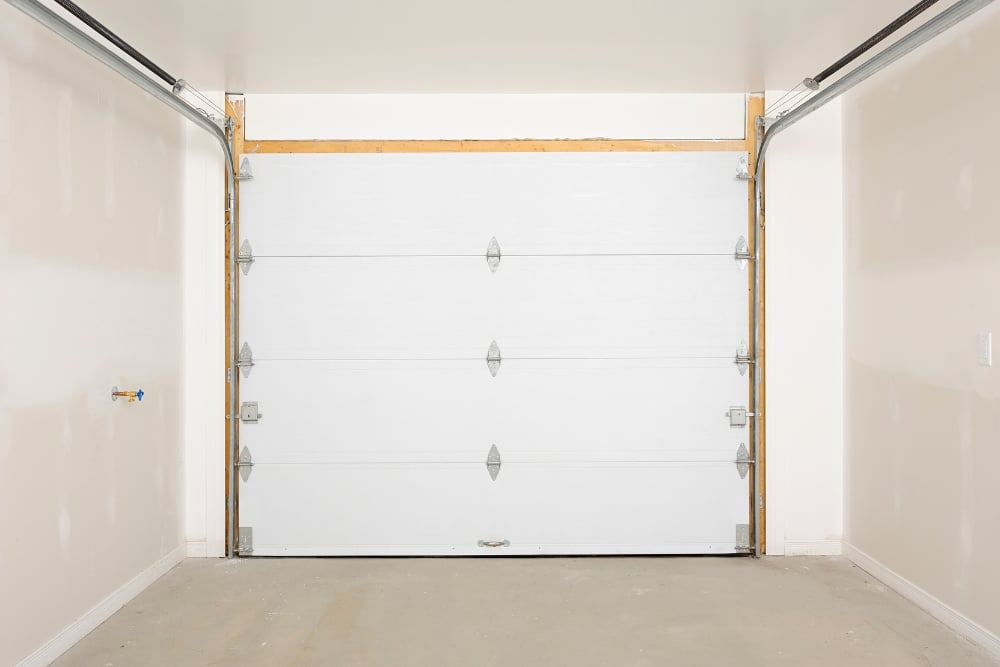
Garage door springs do the heavy lifting. A torsion spring sits above the door, a pair of extension springs run along the horizontal tracks. They counterbalance the weight of the door so the opener motor only has to do a small amount of work.
When springs wear, lose tension, or break, the door becomes heavy and unbalanced. The opener motor struggles, senses resistance, and reverses.
A quick balance test: Disconnect the opener (pull the red emergency release cord), then manually lift the door to about waist height and let go. A balanced door should stay put, or drift very slowly. If it drops quickly, the springs aren’t doing their job.
A worn or broken spring is not a DIY fix. Springs are under serious tension and can cause injury if they release suddenly. This is one to get a technician out for.
The Tracks Or Rollers Need Attention
A garage door that’s dragging, binding, or catching on its way down will trigger the force sensor and reverse. Work through the obvious checks:
- Rollers. Worn, cracked, or seized rollers create friction and resistance. Look at each roller as you manually move the door through its travel. Any that are wobbling, grinding, or visibly damaged need replacing.
- Tracks. Check for dents, bends, or debris caught in the track. Even a small kink creates enough resistance to cause a reversal.
- Lubrication. If the rollers and tracks are dry, a spray of silicone lubricant often makes a noticeable difference. Avoid WD-40, which dries out and attracts dirt.
The Opener Itself May Need Attention
If you’ve worked through the above and the problem persists, the issue may be inside the opener unit itself. Logic boards, capacitors, and gear assemblies all wear over time. If your opener is more than 10 to 15 years old and has started behaving erratically, it may be approaching the end of its useful life.
A repair is sometimes the right call. A replacement is sometimes better value. A technician can give you an honest assessment once they’ve looked at it.
If you’re not sure where to start, our team handles all types of garage door repairs across the Coast and Valley region, from sensor adjustments to spring replacements to full opener upgrades.
When To Call It
Most of the sensor and limit adjustments above are reasonable DIY territory if you’re comfortable doing them. But some things are worth getting professional eyes on:
- Anything involving springs.
- If the door has started reversing suddenly after working fine for years (often signals a spring or mechanical issue, not a settings issue).
- If you’ve adjusted the limits and force settings and can’t get consistent behaviour.
- If the door is grinding, catching, or moving unevenly.
Get in touch with the Coast to Valley team and we’ll work out what’s going on.