Garage doors in strata buildings sit at an awkward intersection. They look like they belong to the lot, they’re used exclusively by the lot owner, but in most cases the door and its structure are classified as common property. That classification has real implications when something needs to be replaced, repaired, or upgraded.
If you own a unit in a strata scheme in NSW and your garage door needs attention, there are a few things worth understanding before any work starts.
Who owns the garage door in a strata scheme?
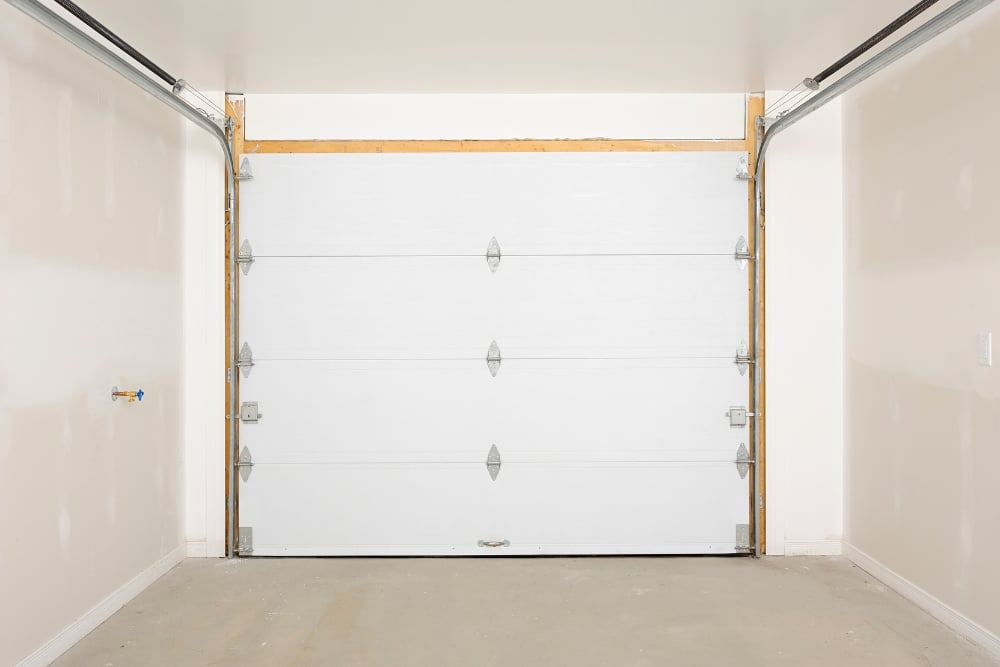
In most strata schemes in NSW, the garage door and the structural elements around it, including the frame, the lintel, and the wall it’s mounted to, form part of the common property. The lot boundary typically runs to the inner face of that wall, meaning everything from the wall outward is owned and managed by the owners corporation.
There are exceptions. Some strata plans define the garage door as part of the lot, and some older schemes have by-laws that shift maintenance responsibility to individual owners. The only way to know for certain is to check the strata plan and your scheme’s registered by-laws.
Why does it matter? Because who owns the door determines who is responsible for maintaining it, who can authorise changes to it, and who pays when it needs replacing.
Here’s the key point: in most NSW strata schemes, the garage door is common property. Check your strata plan and by-laws before assuming you can simply replace it.
Do you need approval to replace a garage door in strata?
Yes, in most cases. If the garage door is common property, the owners corporation needs to authorise any replacement or significant alteration. The level of approval required depends on what’s changing and how it affects the building’s appearance.
Under the Strata Schemes Management Act 2015 (NSW), works to common property generally fall into one of three categories:
- Cosmetic works: no approval required. Painting the inside of a garage or making minor adjustments that don’t affect structure or appearance.
- Minor renovations: require approval, typically from the strata committee by ordinary resolution. Replacing a like-for-like door that doesn’t alter the building’s external appearance often falls here.
- Major renovations: require a special resolution at a general meeting. Changing the door type, size, material, or external appearance is likely to fall into this category.
From 1 July 2025, NSW strata law changes introduced an important procedural update: if your strata committee fails to respond in writing to a minor renovation request within three months, the request is automatically deemed approved. That change applies where a by-law delegates minor renovation decisions to the committee.
Here’s the key point: replacing a garage door in strata almost always requires approval. A like-for-like swap may only need committee sign-off. A change in style, material or size is likely to need a special resolution at a general meeting.
What if the owners corporation is responsible for repairs?
If the door is common property and it’s failed due to normal wear, it’s the owners corporation’s obligation to maintain and repair it. Under section 106 of the Strata Schemes Management Act 2015, owners corporations have a duty to properly maintain and keep common property in a state of good and serviceable repair.
In practice, this means that if a garage door motor dies, a spring breaks, or the door itself becomes structurally unsound through age and use, you can formally request that the owners corporation arrange and fund the repairs. If they fail to act, NSW Fair Trading now has expanded powers under the 2025 reforms to investigate and issue compliance orders for common property maintenance failures.
That said, routine servicing is often treated differently to reactive repairs. Some schemes require lot owners to maintain and service doors at their own cost even if the door is technically common property. Again, the by-laws are the reference point.
Here’s the key point: the owners corporation is legally obligated to maintain and repair common property. If your garage door has failed and the committee is dragging its feet, you now have clearer pathways to escalate through NSW Fair Trading under the 2025 reforms.
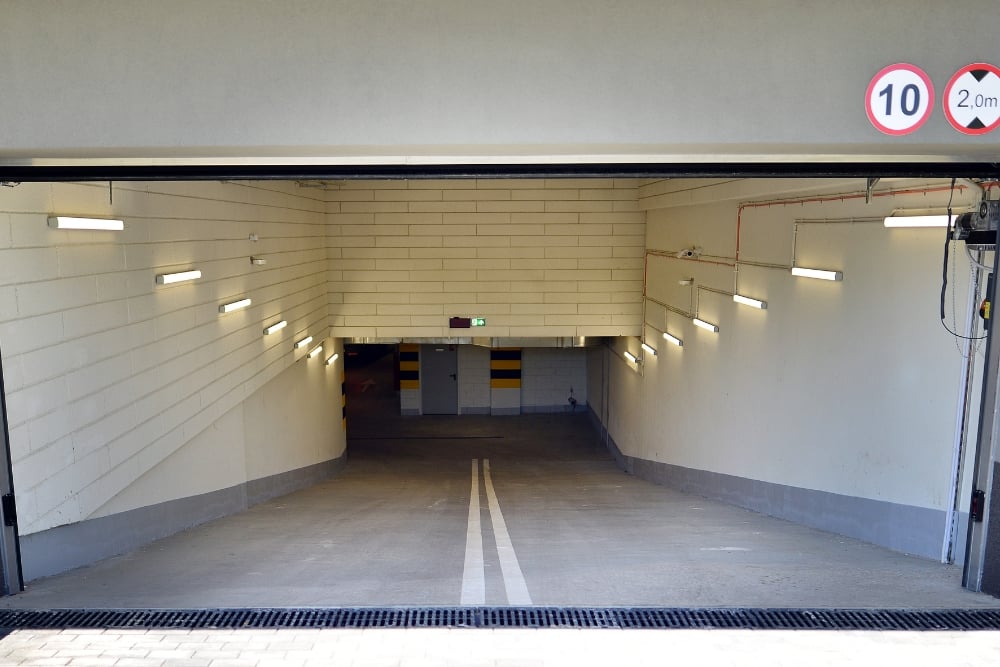
What to look for when specifying a replacement door in strata
Once approval is in place, the specification process matters. Strata buildings often have certain requirements that a freestanding home doesn’t.
Noise is one. A noisy door in an apartment building affects neighbours above, below, and beside the garage. Sectional doors generally run quieter than roller doors, and belt-drive openers are significantly quieter than chain-drive motors. If you’re replacing a door in a building where noise is a concern, it’s worth specifying a quieter system from the outset rather than dealing with complaints later.
Fire ratings are another. Some strata buildings require fire-rated garage doors, particularly where the garage shares a wall with a common corridor or another lot. Any replacement door needs to meet the same fire performance specification as the original.
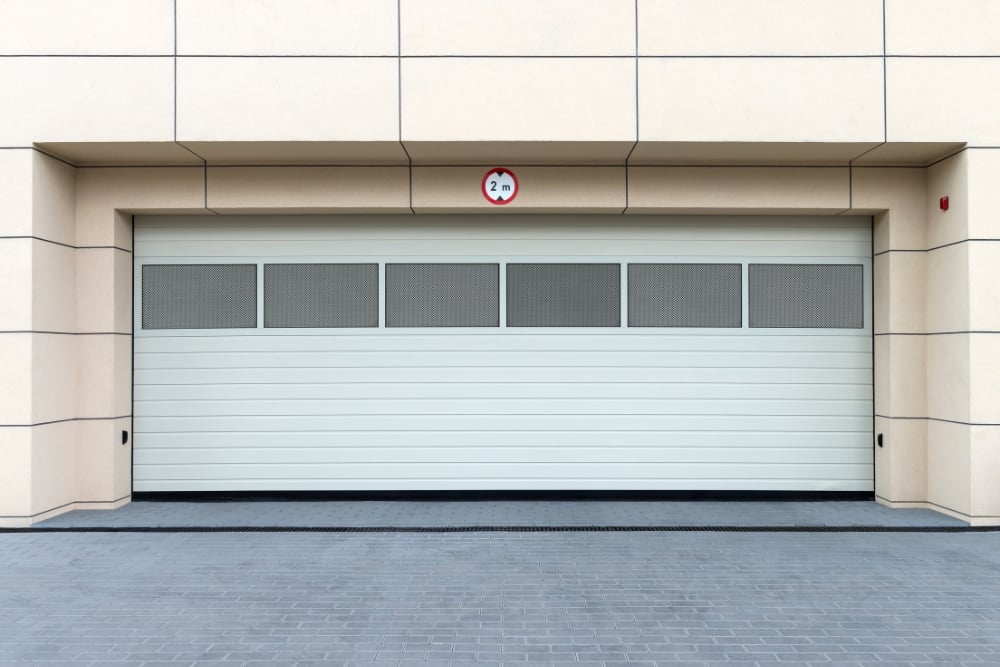
Appearance is the third consideration, and often the one that determines whether you need committee sign-off or a full general meeting resolution. Most strata committees will expect a replacement door to match the existing style, colour, and material across the building. Changing that requires a broader conversation.
Our team can advise on suitable garage door options that meet strata requirements and can provide documentation to support an owners corporation approval submission if needed.
Here’s the key point: strata replacements need to consider noise, fire ratings, and external appearance consistency across the building. Getting the spec right up front avoids approval complications later.
Ongoing maintenance in strata: who services the door?
Even in schemes where the owners corporation owns the garage door, the question of who books and pays for routine servicing isn’t always clearly answered in the by-laws. Many schemes leave it to the lot owner in practice, even if the legal position is ambiguous.
Whatever the arrangement in your scheme, regular garage door servicing matters. Springs, cables, and rollers that aren’t maintained wear faster and fail less predictably. In a strata context, an unexpected failure can cause access problems for the whole building if the door is a shared entry point, or delays in getting a repair authorised and funded if the process requires committee involvement.
We recommend servicing every two years for most environments, and annually for properties close to the coast where salt air accelerates wear on springs and moving parts. Newcastle, Lake Macquarie, and Port Stephens properties sitting close to the waterfront particularly benefit from the shorter cycle.
Here’s the key point: regular servicing reduces the chance of an unplanned failure that requires emergency repairs and owners corporation authorisation. In a strata building, that combination is both disruptive and slow to resolve.
Frequently asked questions
Can I replace my strata garage door without approval?
Only if the door is defined as part of your lot under your strata plan, and your by-laws don’t require committee approval for alterations. For most NSW strata properties, the door is common property and approval is required. Check your strata plan and by-laws first.
What if my owners corporation won’t approve a replacement?
If the door has failed and the owners corporation is responsible for maintaining it, you can formally request they act. Under the 2025 reforms, NSW Fair Trading now has expanded powers to investigate and issue compliance orders for common property maintenance failures. If a minor renovation request is submitted and the committee doesn’t respond in writing within three months, it is automatically deemed approved where the by-laws delegate that decision to the committee.
Do strata garage doors need to meet any specific standards?
Yes. All garage doors and openers installed in Australia must comply with Australian Standard AS/NZS 60335.2.95, which covers safety requirements for automatic door operators. Fire-rated doors must meet the fire performance specification required for their location in the building. Your installer should be across these requirements and provide documentation on request.
Who pays for garage door repairs in a strata scheme?
If the door is common property, the owners corporation is generally responsible for the cost of repairs arising from normal wear and fair use. If the damage is caused by a lot owner (backing into the door, for example), the lot owner is typically liable. Check your scheme’s by-laws and insurance policy, as both will be relevant.
Can you help with the documentation needed for an owners corporation approval?
Yes. We can provide quotes, product specifications, and installation details in a format suitable for submission to a strata committee or general meeting. Get in touch and let us know what you need.
Dealing with a garage door issue in a strata property?
Whether it’s a repair that keeps getting deferred, a replacement that needs the right specification for committee approval, or just a door that needs a service before you submit a request, we can help.
We work across Newcastle, Lake Macquarie, Hunter Valley, Port Stephens, and the Central Coast. Give us a call on 02 4955 3332 to talk through your situation.