Rental properties put garage doors through more than owner-occupied homes. Higher turnover, variable care from tenants, and the tendency for maintenance to be deferred until something stops working all contribute to a pattern of issues that property managers see repeatedly.
Most of these problems are preventable or at least manageable if you know what to look for. This covers the issues that come up most often in rental properties across Newcastle, Lake Macquarie, Hunter Valley, Port Stephens, and the Central Coast, and what to do about them.
Remote controls and opener faults
This is the most frequent callout from rental properties by a significant margin. A tenant reports that the remote has stopped working, the door will not open, or the motor is running but the door is not moving.
In many cases the issue is straightforward: a flat battery in the remote, a remote that has been dropped and damaged, or a remote that has lost its pairing with the motor. These are resolved quickly without any parts. When multiple tenants have moved through a property, it is also common for the motor to accumulate too many paired remotes and reach its memory limit, causing newer remotes to stop functioning correctly.
Genuine motor faults are less common but do occur, particularly on older openers. Signs include the motor running without moving the door, the door reversing immediately after starting to close, or the motor failing to respond at all. Motors from Merlin and Grifco generally have a long service life, but on properties where the opener has not been serviced since installation, limit switches and force settings drift over time and can cause erratic behaviour that looks like a fault but is just an adjustment.
Broken springs
A broken spring is one of the more dramatic failures a tenant will encounter. The door either will not open at all or opens with the motor straining noticeably and closes too fast. On a tilt door, a broken spring can cause the door to drop suddenly, which is a safety issue.
Springs have a finite cycle life. Standard torsion and extension springs are typically rated to around 10,000 cycles, which translates to roughly seven to ten years on a door used twice daily. Properties with higher usage, such as tenants who work from home or run a business from the garage, will go through springs faster.
Springs should always be replaced by a qualified technician. The tension stored in a garage door spring is significant and releasing it incorrectly is dangerous. This is not a DIY repair, and it is worth making that clear to tenants who ask about self-help options.
Panel damage from vehicle contact
Reversed into doors are a consistent issue in rental properties. It usually happens when a tenant is unfamiliar with the clearance in a new garage, or when a tenant has a larger vehicle than the previous occupant. The result is a dented or buckled panel, and in some cases a door that no longer sits correctly in its tracks.
Minor contact damage on a sectional panel door can sometimes be addressed by replacing the affected panel section rather than the whole door, depending on the door type and whether replacement panels are still available. Older doors often present a problem here as manufacturers discontinue panel profiles over time, making matching panels difficult to source.
Documenting the condition of the garage door at the start of each tenancy with photos is the most effective way to establish responsibility when panel damage is discovered at the end of a lease.
Deteriorated weather seals
Weather seals are the rubber or brush seals that run along the bottom of the door and down the sides of the frame. They keep out water, dust, pests, and to some extent noise. They are also one of the first components to deteriorate on a door that has not been maintained.
Cracked, flattened, or missing seals are a common finding on routine inspections of older rental properties. Tenants often do not notice because the door still operates, but the gap at the bottom of a failed seal lets in water during heavy rain, which can cause damage to garage contents and to the floor over time. In coastal areas particularly, a door without an effective bottom seal will accumulate salt grit underneath, which accelerates corrosion of the tracks and hardware.
Seal replacement is a low-cost maintenance item that is easy to overlook but worth including on periodic inspection checklists.
Misaligned or obstructed tracks
Tracks guide the door through its travel and take a lot of incidental contact over the life of the door, particularly at the base of the vertical section where vehicles, bikes, and general garage clutter tend to catch them. A bent or misaligned track causes the door to bind, stick, or run unevenly, and if left unaddressed will accelerate wear on the rollers and eventually on the door panels themselves.
Minor track misalignment can be adjusted without replacing the track. A significant bend from vehicle contact usually means the affected section needs replacing. Either way, running a door on a damaged track for an extended period makes the eventual repair more expensive.
Lack of lubrication and routine servicing
A garage door has a lot of moving metal parts and most of them need periodic lubrication to operate correctly over the long term. Rollers, hinges, torsion bars, and springs all benefit from a light application of appropriate lubricant once or twice a year. Without it, metal-on-metal contact accelerates wear and the door becomes progressively noisier and harder to operate.
This rarely happens in rental properties unless the owner has a routine servicing arrangement in place. Tenants generally do not service garage doors, and the deterioration is gradual enough that it goes unnoticed until something fails. A service that includes lubrication, spring tension adjustment, and a motor check every two to three years catches most issues before they become callouts.
Handling garage door repairs in a rental property
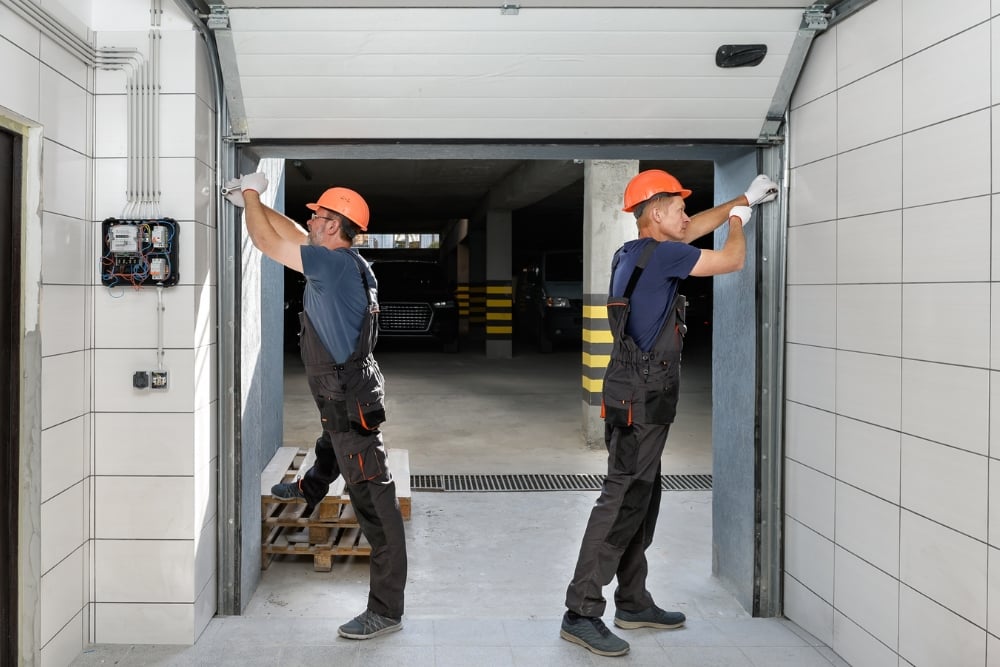
Most of the issues above are repairs, not replacements. Springs, seals, remotes, track adjustments, and motor services are all standard repair work that should be turned around quickly to avoid tenant inconvenience and security risks from a door that cannot be fully closed.
Coast to Valley Garage Doors responds fast to repair callouts across the region. For a summary of what our garage door repair service covers, including broken springs, damaged panels, cable replacement, and weather seal repairs, visit the repairs section of our services page.
For property managers coordinating repairs on behalf of owners, we can communicate directly with tenants to arrange access and provide job reports and photos on completion, which simplifies the documentation trail for insurance or dispute purposes.
To log a repair or discuss a maintenance arrangement for properties in your portfolio, contact the Coast to Valley team or call 02 4955 3332.