A garage door that has started grinding, scraping, or making a harsh metallic noise is telling you something. The sound usually means metal is in contact with something it should not be, either because a component has worn down, shifted out of position, or lost its lubrication.
Left alone, these noises tend to get worse rather than better. What starts as an occasional scrape on the way up often becomes a full bind or failure within weeks or months. This guide covers the most common causes so you can identify what is happening and explains when it is safe to leave it for a service versus when you need someone out quickly.
If the noise is already affecting how the door operates, the Coast to Valley repair service covers all of the issues below and is available across Newcastle, Lake Macquarie, Hunter Valley, Port Stephens, and the Central Coast.
Worn or dry rollers
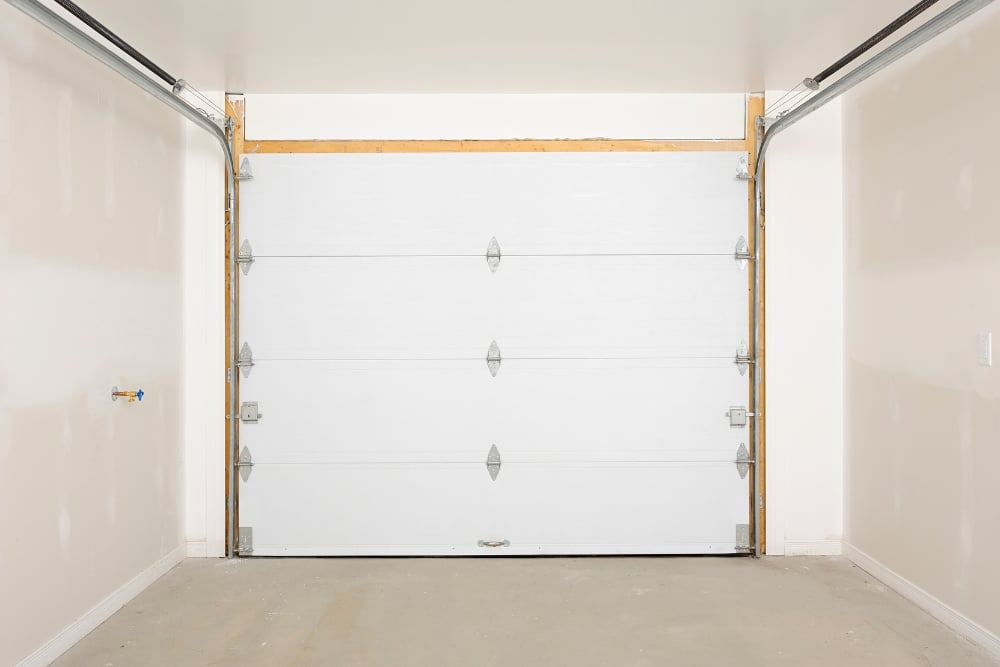
Rollers are the wheels that sit in the tracks and carry the door through its travel. On a sectional panel door there are typically eight to twelve rollers depending on the door height. On a tilt door there are fewer, but they take more load per cycle.
Rollers wear over time. Nylon rollers crack and become uneven. Steel rollers lose their smooth surface and develop flat spots. Both types produce noise when dry. A grinding or rumbling sound that is present throughout the full travel of the door, both up and down, is often roller related.
In many cases, the noise can be reduced significantly by cleaning the tracks and applying a suitable lubricant to the rollers and hinges. If the rollers themselves are visibly cracked, seized, or have flat spots, lubrication will reduce the noise but will not fix the underlying problem. Worn rollers should be replaced before they cause wear to the tracks or put additional strain on the motor.
Bent or misaligned tracks
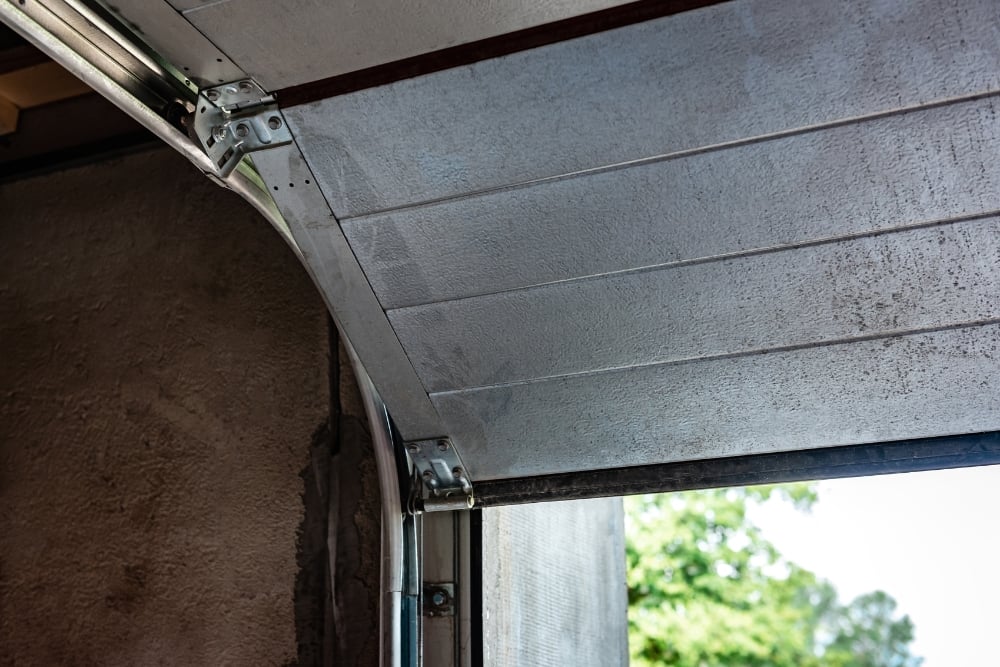
If the scraping noise comes and goes at the same point in the door’s travel, the track is the likely cause. The door is catching on a bent section, a loose bracket, or a section of track that has shifted out of alignment.
Stand alongside the door and watch it move. You can usually see the point where it hesitates or pulls sideways in the track. A minor misalignment can sometimes be corrected by loosening the track brackets, realigning by hand, and retightening. A bent section from vehicle contact or a knock from stored items in the garage needs to be replaced.
Do not continue running the door on a damaged track. The rollers will chip and wear against the bent section, and eventually the door can come off the track entirely. A door that has jumped off its tracks is a much larger job than a bent track section, and there is a safety risk if it comes down under its own weight.
Worn hinges
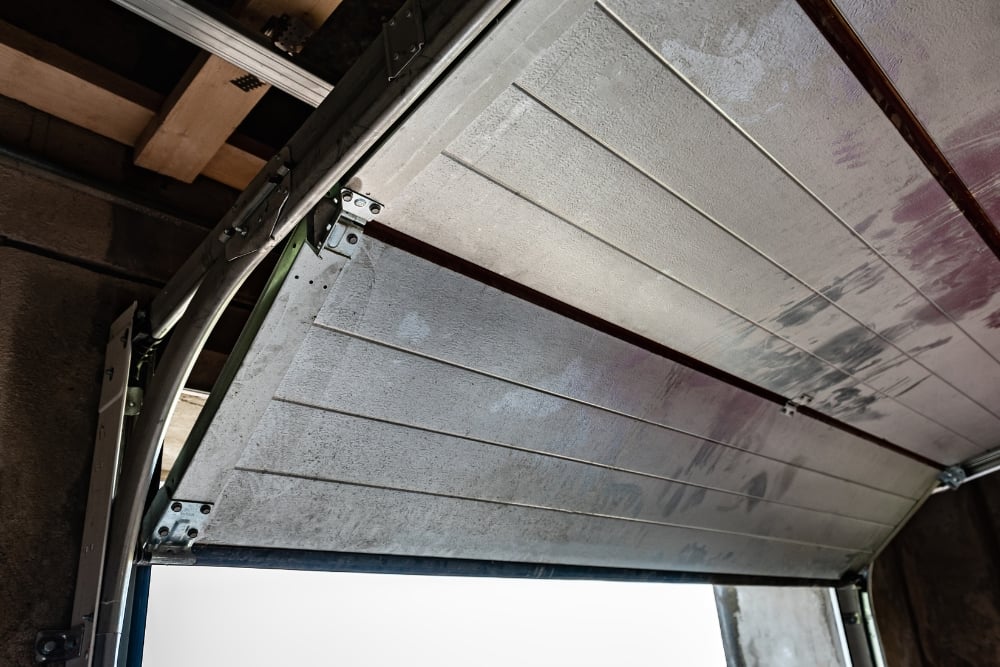
Sectional panel doors have hinges connecting each panel. These flex every time the door moves through the curved section of track where it transitions from vertical to overhead. Over thousands of cycles the hinge pins wear, the pivot points become loose, and the panels start to rub against each other rather than moving cleanly.
Squeaking or grinding that is loudest at the point where the door curves overhead is often hinge-related. A light application of lubricant will confirm it: if the noise reduces immediately and returns within a few weeks, the hinges are worn and lubrication is only masking the issue. Replacing hinges is inexpensive and straightforward.
Spring noise: when to pay attention
A loud bang followed by the door becoming very heavy is a broken spring, not a grinding noise, and it is easy to identify. The noise to watch for is a creaking or groaning that comes from the spring assembly, usually audible when the door is near fully open or near fully closed.
Torsion springs sit on a bar across the top of the door opening. Extension springs run alongside the tracks. Both should be lubricated periodically. A spring that has not been lubricated for several years will creak under load as the coils rub against each other.
If the noise from the spring area is a grinding or scraping rather than a creak, do not attempt to adjust it yourself. Spring adjustment and replacement require specific tools and technique. An incorrectly tensioned spring can release suddenly and cause serious injury.
Motor and drive rail noise
Automated garage doors run on either a chain drive, belt drive, or direct drive system. Chain drives are the most common and produce the most noise under normal operation, but a chain that is loose or dry will produce a distinct rattling or grinding sound that is different from the normal operating noise.
A loose chain slaps against the drive rail on each cycle. A dry chain grinds as it moves through the sprocket. Both are addressed by adjusting the chain tension and lubricating the chain. On a belt drive system, the belt itself rarely makes noise, but the trolley carriage or the rail can produce a scraping sound if the trolley has worn or the rail has accumulated grit.
If the motor itself is making a grinding noise, that is a mechanical issue inside the motor unit and needs professional diagnosis. A grinding motor often indicates a stripped gear, which is a common fault on older Merlin and similar openers and is usually repaired by replacing the gear kit rather than the whole motor.
What you can do yourself before calling for a repair
A few things are worth trying before booking a service call, particularly if the noise is recent and the door is still operating normally.
Clean the tracks. A build-up of dust, grit, and old lubricant in the tracks is surprisingly common and can cause scraping on its own. Wipe the tracks down with a damp cloth and run the door a few times to see if the noise changes.
Lubricate the moving parts. Use a garage door specific lubricant or a lithium-based spray, not WD-40 or general oil. Apply to the hinges, rollers, and springs. Do not spray lubricant in the tracks themselves as it will attract dirt and make the problem worse. Run the door several times after applying to work the lubricant in.
Check for loose hardware. Vibration over thousands of cycles works bolts loose. A quick check of the hinge bolts, track bracket bolts, and spring anchor bolts will sometimes reveal something that has worked loose and is causing the noise.
If none of these resolve the issue or if the noise is accompanied by the door binding, running unevenly, or straining on the motor, it is time to get someone to look at it.
What customers say after a repair
Noisy doors are one of the most common reasons people call Coast to Valley Garage Doors, and it is consistently the job where customers notice the biggest difference.
Chris Morris called in about a noisy and intermittent door. After the technicians identified the issues and completed a full service, he noted: the door “is now operating like a new door.” Vanessa Norris had a similar experience after a cable replacement and service: “it’s never been so smooth and quiet.” Darren McKinney had a door failure in the afternoon, had someone out within 45 minutes, and said the door “has never worked better.”
The pattern across the Coast to Valley reviews is consistent: fast response, the problem diagnosed and explained clearly on the day, and a door that operates correctly when the team leaves. Diane Williams had her door fixed, serviced, and batteries replaced in remotes all in the same morning. Sara Ryan had a snapped cable, and jammed door sorted the following day after emailing that evening.
If your garage door is grinding, scraping, or making any noise that was not there a few months ago, get in touch with the team before a service job turns into a replacement. Contact Coast to Valley Garage Doors or call 02 4955 3332.