Generally, yes. But the reason why isn’t what most people expect.
It’s not the insulation foam itself that extends the door’s life. It’s the construction. Insulated doors are built with two steel skins sandwiching a foam core, and that double-skin structure is inherently more rigid and more resistant to denting, warping, and panel flex than a single-skin door. That structural difference is what drives the lifespan gap.
That said, ‘longer lasting’ isn’t a guarantee across the board. A well-maintained standard door in a sheltered location can outlast a neglected insulated door with corroded hardware. Material quality, installation, and ongoing care all play a role in the longevity of a door. Our garage doors range covers both options, and we give customers an honest picture of what to expect from each.
How Long Do Garage Doors Typically Last?
A good quality sectional garage door, properly installed and regularly serviced, should last 20-30 years. Springs typically need replacing every 7-10 years. Openers have their own lifespan, usually 10-15 years depending on usage and motor quality.
The door panels themselves are usually the last thing to go. When panels fail early, it’s almost always due to corrosion, impact damage, or UV degradation rather than normal wear.
Insulated doors, in our experience, tend to sit toward the upper end of that range. Standard single-skin doors, particularly thinner gauge steel, tend to sit toward the lower end.
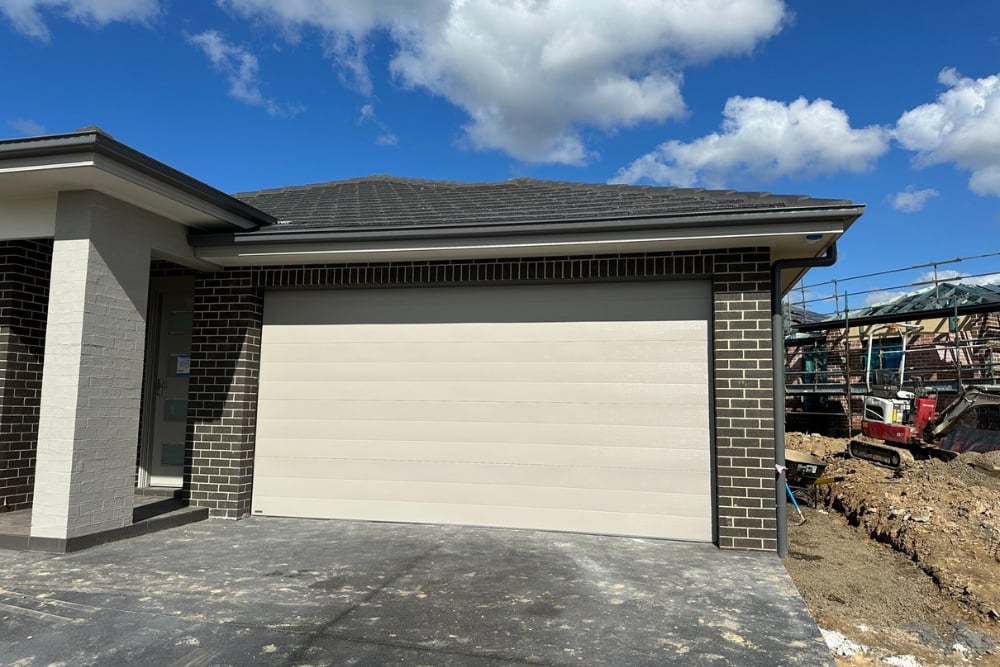
Why the Construction Makes a Difference
A single-skin steel door is exactly what it sounds like: one layer of steel, typically 0.4-0.6mm thick, with no backing. It’s light, affordable, and functional. But that single layer flexes, and over time that flex causes fatigue at the panel joints and hardware attachment points.
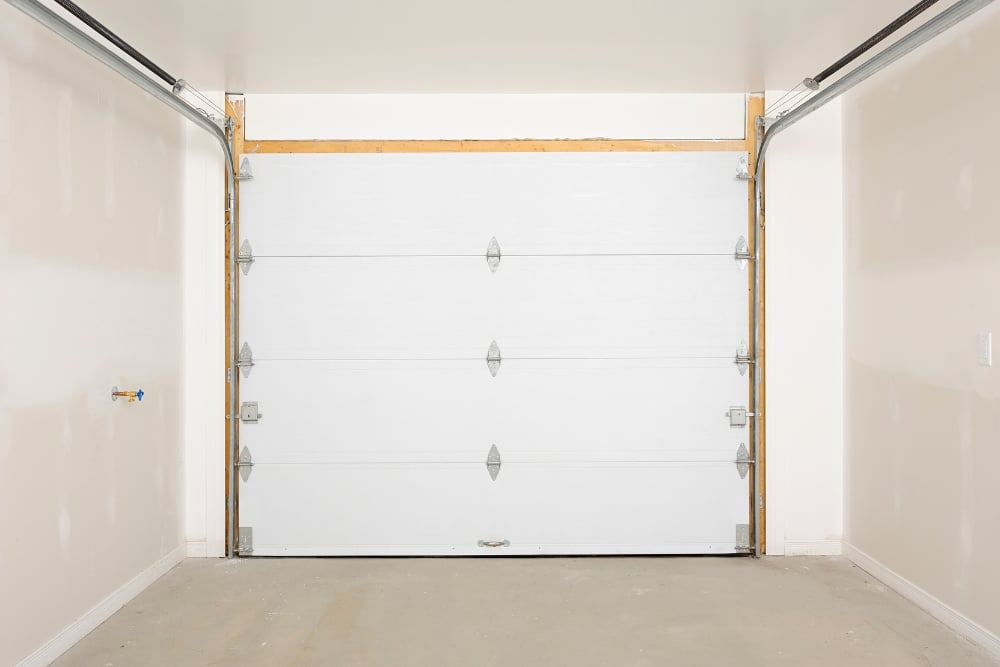
A double-skin insulated door has the foam core bonded between two steel faces. That composite structure is significantly stiffer. Less panel flex means less stress on the hinges, rollers, and tracks over thousands of cycles. It also means the panels hold their shape better over time, which keeps the seals intact and the door operating smoothly for longer.
Think of it like the difference between a hollow-core interior door and a solid-core door. Same size, very different feel and durability.
The Coastal and Climate Factor
Around the Lake Macquarie, Newcastle, and Central Coast area, the environment is the real enemy. Salt air accelerates corrosion on steel components, UV exposure degrades paint finishes, and the temperature swings between summer and winter can cause thermal expansion and contraction in the panels.
Insulated doors handle thermal movement better. The foam core buffers the temperature differential between the inside and outside face of the panel, which reduces the expansion and contraction stress on the steel skins and the paint. Standard single-skin panels experience the full temperature swing across a single thin layer, which is harder on the finish over time.
For anyone close to the water in areas like Belmont, Swansea, or Redhead, this matters more than it would for someone in a sheltered inland suburb.
Where They’re Actually Similar
Hardware lifespan is roughly the same regardless of whether the door is insulated or not. Springs, cables, hinges, rollers, and tracks wear at rates determined by cycle frequency, lubrication, and installation quality, not by whether the panels are insulated.
Paint and finish durability depends more on the coating quality and the environment than on whether the door is single or double skin. A quality Colorbond finish on a standard door will outlast a cheaper powder coat on an insulated door.
For a direct breakdown of the differences between the two door types across cost, performance, and durability, the insulated vs non-insulated garage doors comparison covers that ground in detail.
What Actually Shortens a Garage Door’s Life
Whether the door is insulated or not, these are the things that cut years off its lifespan:
- Skipping servicing. Dry rollers, stiff hinges, and unlubricated springs wear out faster and put more load on every other component. A service once a year, or every two years at minimum, makes a real difference.
- Ignoring small problems. A slightly bent track, a worn roller, or a fraying cable all create additional stress on nearby components. Small issues become expensive ones faster than people expect.
- Corrosion on bottom sections. Water sits at the base of the door. If the bottom seal is worn and water is getting under the door, the bottom panel and the hardware at the base corrode first.
- Garage doors don’t usually fail suddenly. They give you signals first. If you’re seeing any of the warning signs covered in signs you need a new garage door, it’s worth getting them assessed before the door becomes a safety issue or causes damage to the opener.
Is the Extra Lifespan Worth the Cost?
Insulated doors cost more upfront, typically 20-40% more than a comparable single-skin door depending on the panel thickness and style. Whether that’s worth it comes down to what else you’re getting alongside the potential longevity benefit.
If you’re using the garage as a workshop, home gym, or living-adjacent space, the thermal comfort alone often justifies the cost. If the garage is just for car storage and you’re in a sheltered location, a good quality standard door will do the job for decades.
There’s also a property value angle to consider. Does an insulated garage door increase property value? looks at that question specifically, which is worth reading if you’re weighing up the investment on a home you’re planning to sell.
The Bottom Line
Insulated doors do tend to last longer, and the structural reasons for that are real. But the gap isn’t enormous, and it won’t overcome poor installation, skipped maintenance, or a harsh environment without the right hardware.
Buy a quality door, have it properly installed, service it regularly, and sort problems early. That applies whether it’s insulated or not.
If you’re unsure which option suits your situation, give us a call on 02 4955 3332. We’re based in Cameron Park and work across Lake Macquarie, Newcastle, the Hunter Valley, Port Stephens, and the Central Coast. Happy to talk it through.