Many homeowners aren’t sure if their garage has the right dimensions for a new door. This often leads to installation issues, especially when there’s not enough clearance for tracks, motors, or supports. In some cases, doors don’t fit at all — costing time and money to adjust framing or order custom parts.
The space around the opening matters just as much as the width and height. If the headroom is too low or the backroom too short, even a standard-sized door won’t install properly. Misjudging these details can delay your project or lead to poor operation after install.
This guide outlines the space needed for safe and compliant installation. It covers standard sizes, required clearances, and factors that may affect fit. Whether you’re updating an old setup or building a new structure, knowing these measurements helps you avoid installation problems later.
Standard Garage Door Sizes in Australia
Most installations use standard sizing, which simplifies planning. These measurements suit typical garage openings and are widely available across manufacturers.
For single bays, the standard height is 2100mm with widths ranging from 2400mm to 3000mm. For double-width setups, the same height applies, with widths between 4800mm and 5600mm. These options work for most modern vehicles and can be adapted with matching motors and track systems.
If you’re replacing an existing unit, your current frame may already align with one of these sizes. However, if you’re building new or enclosing a carport, it’s important to check that the opening supports standard sizing. Any deviation may require a custom-fit system.
Custom doors are also available for openings outside these ranges. These can suit specialty designs, limited space, or non-standard frames. A proper assessment ensures you’re choosing the right size without relying on guesswork.
Clearance Requirements for Installation
Headroom
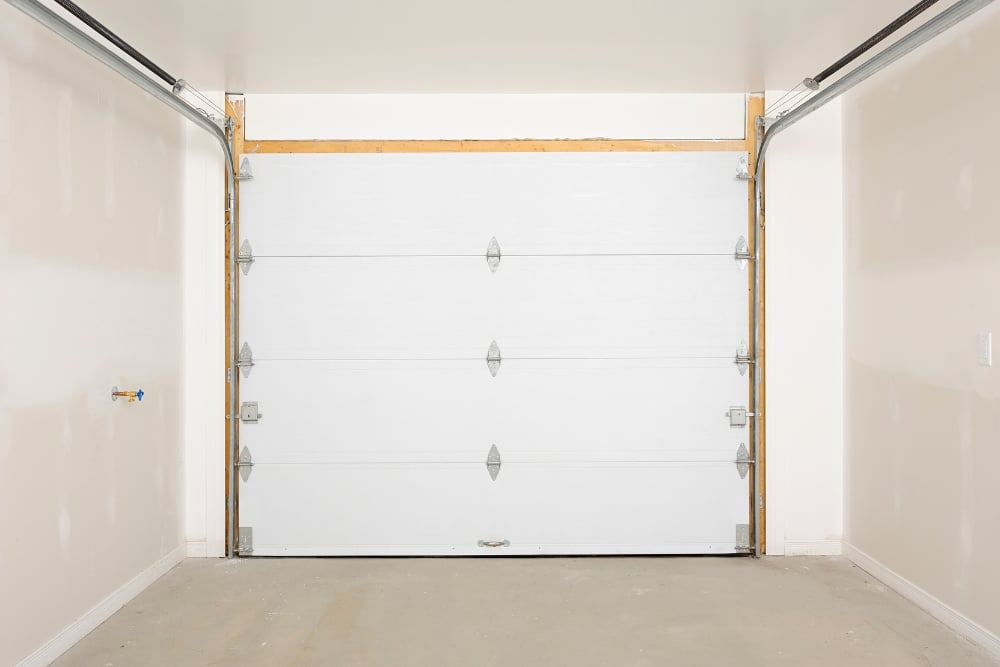
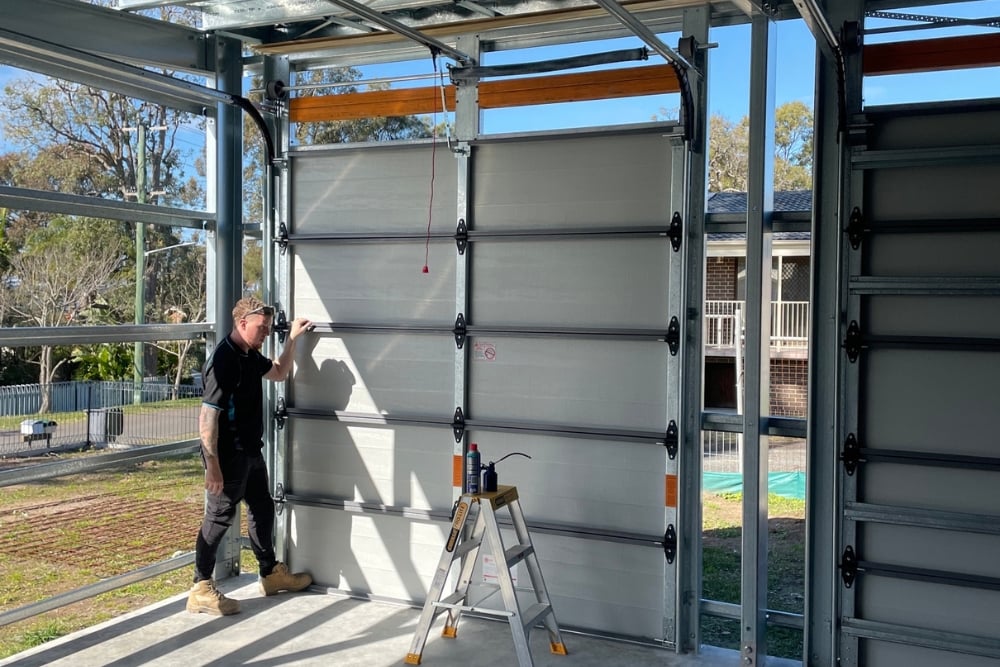
Headroom is the space between the top edge of the opening and the ceiling. This area must allow room for the tracks to curve back into the garage and, if installed, the motor system. A standard sectional setup requires at least 300mm of vertical space above the opening.
If this is not available, low-clearance kits may help, but they often limit opener compatibility or may affect system performance. Homes with bulkheads, ducting, or lighting in this space should confirm clearance before choosing a system.
Side Room
Side room is the space on both sides of the opening. It allows for mounting the vertical tracks and brackets. A manual configuration requires at least 100mm on each side, while motorised systems typically need 150mm or more. Without this space, tracks may not fit properly, which can lead to poor alignment, installation delays, or equipment failure.
Backroom
Backroom refers to the distance from the opening to the rear wall. This space must accommodate the full retraction of the door. A typical setup requires the door height plus 500mm. For example, a 2100mm high setup needs at least 2600mm of internal depth. Insufficient backroom may prevent the door from opening fully or restrict motor placement.
Factors That Can Affect Space Requirements
Some garage layouts create clearance issues even if the opening is standard. These common factors may affect fit:
- Sloped ceilings or exposed beams limit track and opener placement
- Lights, pipes, or ducting can block required headroom
- Wall-mounted shelves or storage reduce available side room
- Tilt models need extra space in front to open safely
- Switching door types may require changes to hardware or track layout
A site check helps confirm if any adjustments are needed before installation begins.
Why Accurate Measurements Matter
Incorrect space measurements are a common cause of failed installations and added costs. Even a small miscalculation in headroom, side room, or depth can prevent a system from fitting properly. This may lead to on-site delays, extra framing work, or needing to switch to a different model.
Clearances also affect how well the system functions over time. If there’s not enough space for tracks or the opener, the unit may strain during operation. This can result in loud movement, uneven wear, or alignment issues. Long-term performance and safety features depend on a proper fit.
Warranties may also be affected if a unit is installed without meeting the correct spacing requirements. Some manufacturers require that space conditions match their minimum specifications. Verifying clearances before installation avoids this risk.
To avoid these issues, it’s best to confirm all key dimensions during the planning stage. Getting it right early makes the process faster and reduces unexpected changes once work begins.
When to Call a Professional
Measuring for a new installation may seem simple, but small errors can cause delays or compatibility issues later. While DIY checks can give you a rough estimate, only a qualified technician can confirm whether the ceiling height, side room, and garage depth meet the required clearances.
A professional can also identify obstacles that aren’t always obvious — such as wiring, structural beams, or uneven flooring — that may interfere with installation. This helps prevent rework and ensures the correct system is chosen the first time.
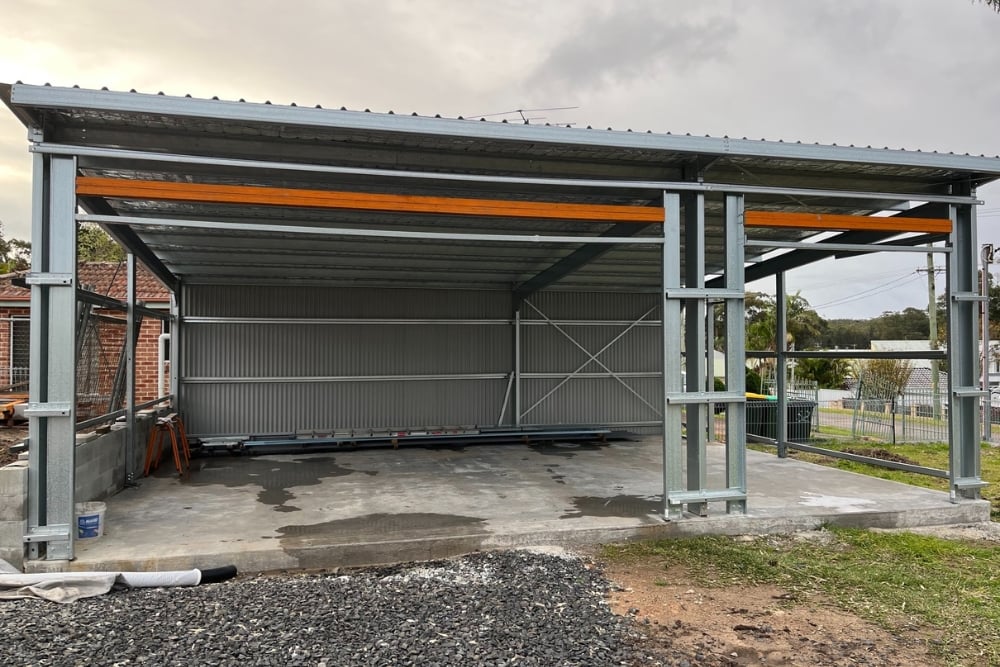
Custom setups, carport conversions, or non-standard openings almost always need expert input. In these cases, a site inspection can confirm whether a sectional, tilt, or roller type is most suitable.
For expert advice and accurate assessments, Coast to Valley Garage Doors offers onsite inspections and guidance tailored to your space. If you’re planning a new fit-out or unsure about clearances, contact us to book an inspection with our team.
Frequently Asked Questions
Can I change the opening size to fit a standard system?
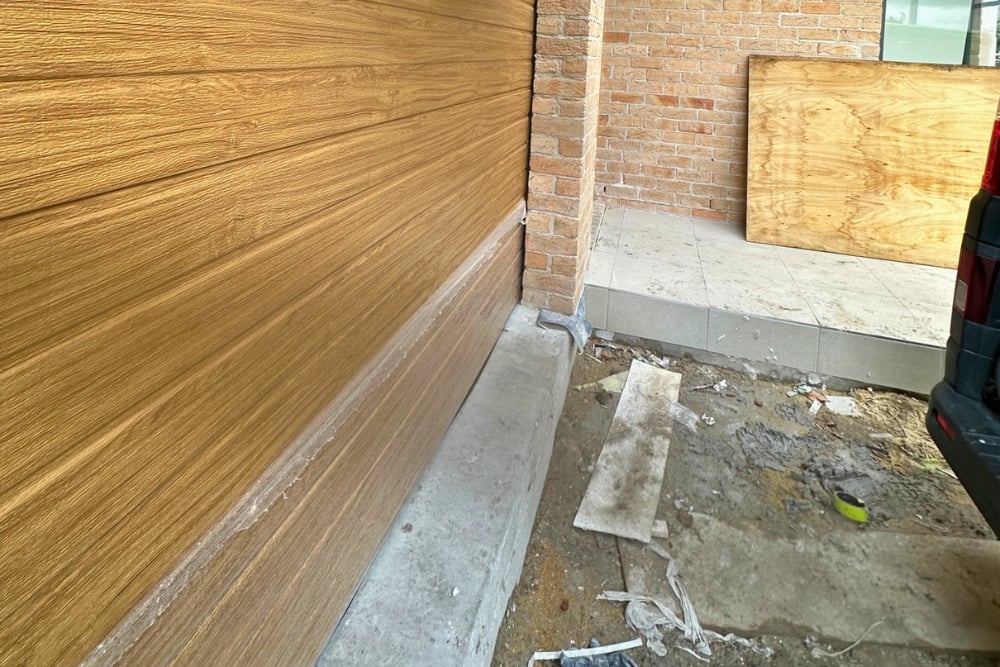
Yes. In some cases, the opening can be resized by modifying the frame. This may involve adding timber packers, adjusting brickwork, or building out side posts to match standard sizes.
Is there a difference in space needs between insulated and non-insulated doors?
Insulated models are often thicker and may require slightly more headroom or backroom for proper retraction. Always check specifications if insulation is a priority.
How do I know if my existing opener will work with a new system?
Compatibility depends on the track layout, door weight, and available clearance. A technician can check if your current motor can be reused or if it needs replacement.
Can clearance issues affect council approval?
No. Local approvals are usually based on appearance and setback, not internal space. However, fitment issues may delay the build if not addressed early.
Do different brands require different clearances?
Clearance needs are mostly based on door type, not brand. However, some manufacturers have different track designs or low-profile hardware that can reduce space requirements.