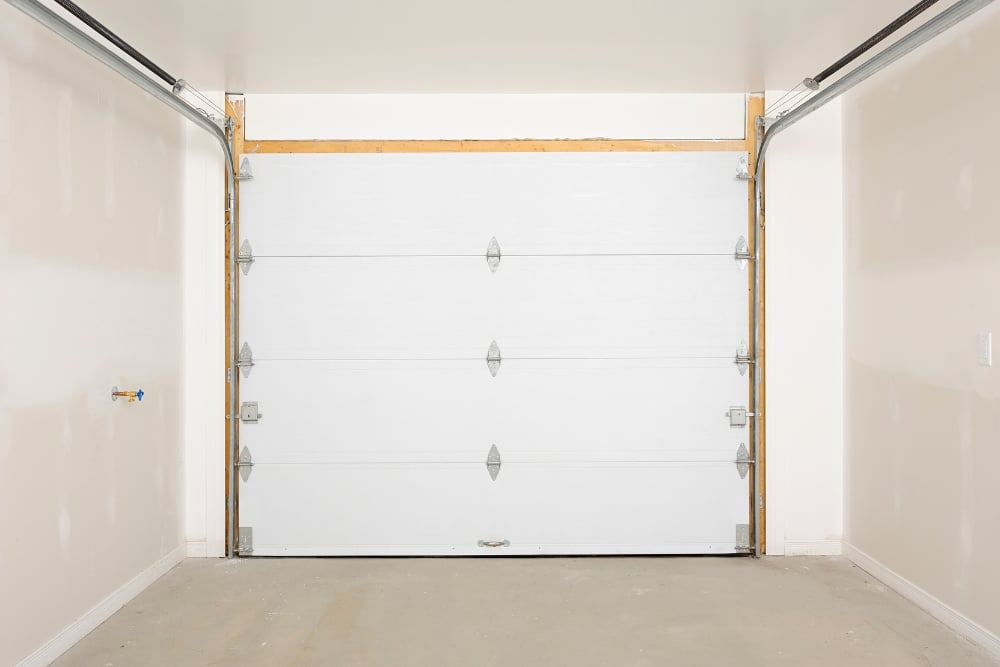
Your garage door just jumped its tracks. Maybe it’s hanging at a weird angle, grinding when you try to open it, or it’s jammed halfway and won’t move at all. Here’s what to do right now and what not to do.
First: Stop Using It Immediately
This is the big one. A door that’s off its tracks is under tension – springs, cables, and rollers are all under load. Keep hitting the remote or forcing it manually and you risk:
- Bending the tracks beyond repair (a $50 roller fix turns into a $400 track replacement)
- Snapping a cable or spring under tension (dangerous, and expensive)
- The door dropping suddenly if it’s only partially engaged with the track
Hit the emergency release cord (the red rope hanging from the opener) to disconnect the automatic opener. Then leave it alone.
What Causes a Garage Door to Come Off Its Tracks?
Knowing why it happened helps figure out whether it’s a quick fix or something bigger.
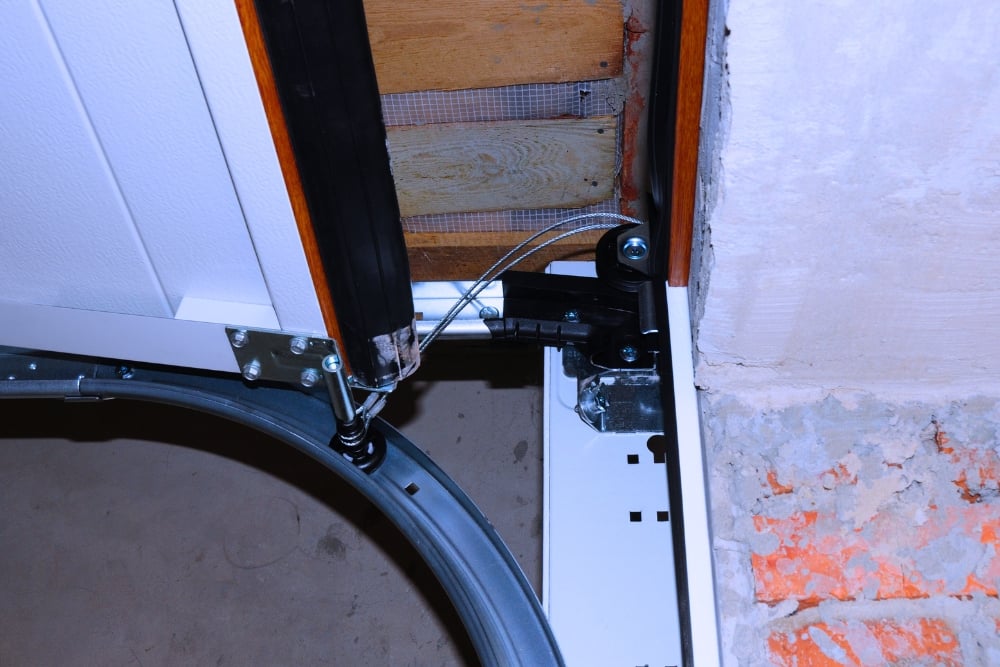
Worn or broken rollers are the most common cause. The rollers that run inside your tracks wear down over time, nylon rollers especially. Once they’re worn flat or cracked, they jump out under load. If you can see a roller sitting outside the track, this is likely your culprit.
A bent track usually happens from impact, reversing into the door, a trolley or bin catching it, or just years of minor knocks. Even a small kink in the track is enough to derail a roller.
Loose track hardware. The brackets holding your tracks to the wall can loosen over time. When the track shifts, the door follows. Check whether your tracks are still sitting plumb and straight.
Cable issues. If a cable has snapped or come off the drum, the door can drop unevenly and pull rollers off the track on one side. You’ll often hear a loud bang when this happens.
Dirt and debris in the track. Less dramatic, but a buildup of grit, old grease, or a small stone caught in the track can derail a roller if it hits it at speed.
Can You Fix It Yourself?
Sometimes. If it’s a single roller that’s popped out and the track isn’t bent, you can often seat it back into the track yourself. Here’s how:
- Disengage the opener (pull the red release cord)
- Lift the door slightly by hand to create slack
- Use pliers to carefully prise the track open just enough to seat the roller back in
- Pinch the track back closed with pliers
- Reconnect the opener and test slowly
That’s the easy scenario. Before you attempt anything, have a good look at what’s actually going on:
Track visibly bent or kinked? Don’t try to muscle it. Bent track needs to be replaced or professionally straightened. Forcing a door through a kinked track just makes it worse.
Cable or spring involved? Stop there. Springs store enormous tension and can cause serious injury if they release suddenly. This is a job for someone with the right tools and training.
More than one roller off? The door has usually come off because something structural has shifted. Get it properly inspected before you start bending the tracks.
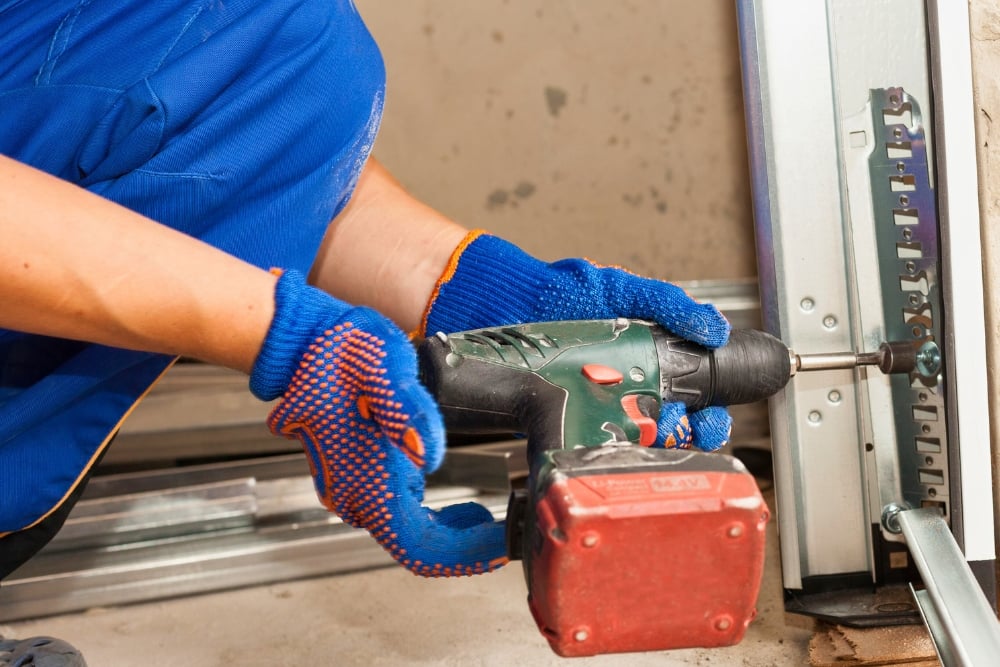
What a Garage Door Technician Will Do
When Coast to Valley comes out to a door off its tracks, the process is usually:
- Inspect the full door: not just where it derailed, but the rollers, tracks, cables, springs, and opener. Often the visible problem is a symptom of something else.
- Reset the door: carefully move the door back into alignment, seating all rollers properly in the tracks.
- Replace what’s worn: if the rollers are shot, we replace them while we’re there. Standard nylon rollers are cheap, and replacing them now saves another service call in six months.
- Adjust and realign: check the tracks are plumb, properly spaced, and the horizontal sections have the right pitch.
- Test the door: run it through a full cycle and check the balance. A door that’s off-balance puts extra strain on everything else.
Most of the time, a door off its tracks is a same-day fix. If we’re replacing rollers and realigning, allow 45 to 90 minutes.
When It’s a Genuine Emergency
If the door is halfway open and stuck, it’s a security issue as much as a mechanical one. Same goes if it’s jammed shut and your car is inside.
Call us directly. We handle urgent garage door repairs across the Coast and Valley region. Contact the team at Coast to Valley Garage Doors and we’ll get to you as fast as we can.
How to Stop It Happening Again
A door off its tracks is usually the end result of deferred maintenance. A few habits that help:
Lubricate the rollers and tracks every 6 to 12 months. Use a silicone-based lubricant or a product designed for garage doors, not WD-40, which strips lubrication rather than adding it. A well-lubricated door puts less stress on every component.
Check your rollers once a year. Give each roller a look. If they’re cracked, chipped, or worn flat, replace them before they cause a problem. Standard nylon rollers last 5 to 7 years under normal use.
Keep the tracks clear. Brush out any dirt or debris from the bottom of the tracks when you notice it. A small stone at the right spot can pop a roller.
Don’t ignore noise. Grinding, scraping, or a door that shudders when it moves are all early warning signs. By the time a door comes off its tracks, it’s usually been telling you something was wrong for a while.
If your door needs more than a quick fix, or you’d rather have someone experienced look it over, take a look at our garage door repair and service options covering everything from single roller replacements to full door and track overhauls.