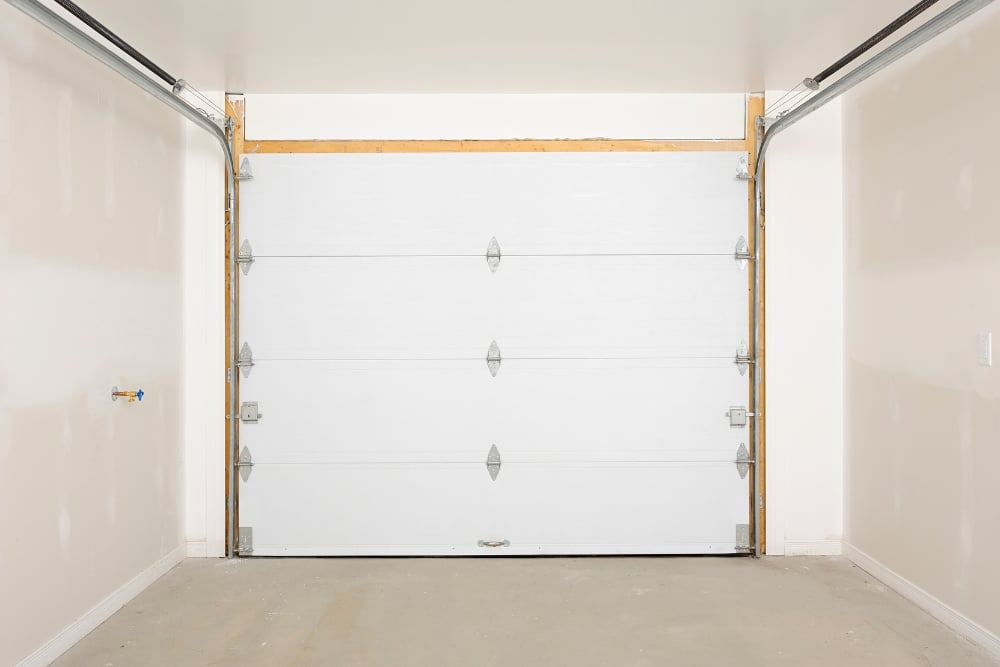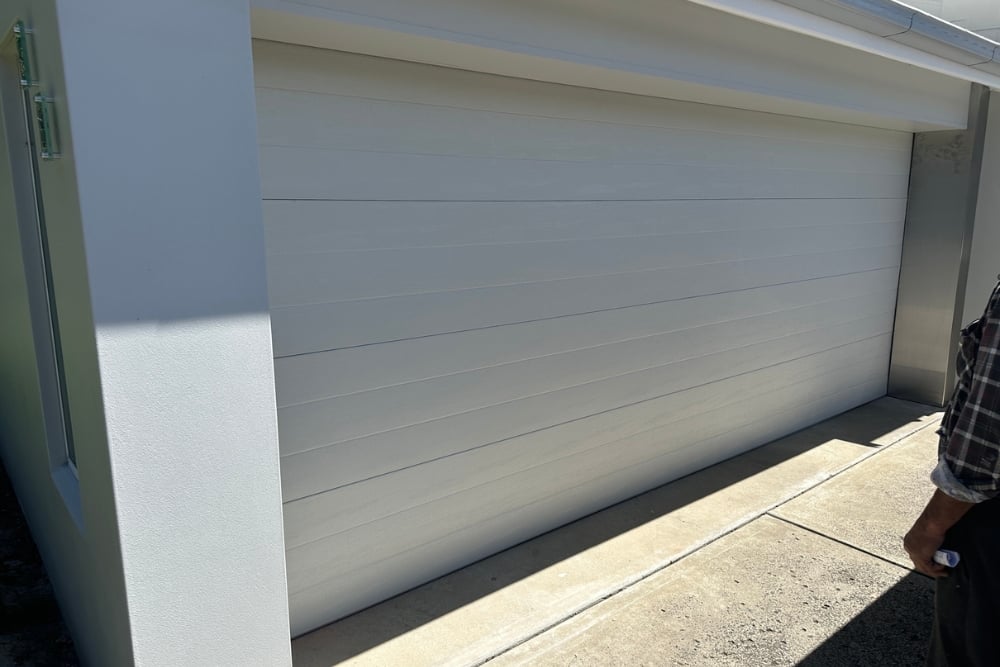
It’s one of those questions people don’t think to ask until they’re mid-project, or until their opener starts struggling and someone suggests the door might be too heavy for the motor.
Good question to ask, though. Door weight affects your spring tension, your opener selection, and how safely the door operates day to day. Our sectional garage doors come in a range of materials and configurations, and the weight varies quite a bit depending on what you choose.
What Does a Typical Sectional Door Weigh?
For a standard single-car sectional door (roughly 2400mm wide x 2100mm high), you’re generally looking at:
- Single-skin steel: 45-65 kg
- Double-skin steel (non-insulated): 60-80 kg
- Insulated steel (foam-injected): 70-100 kg
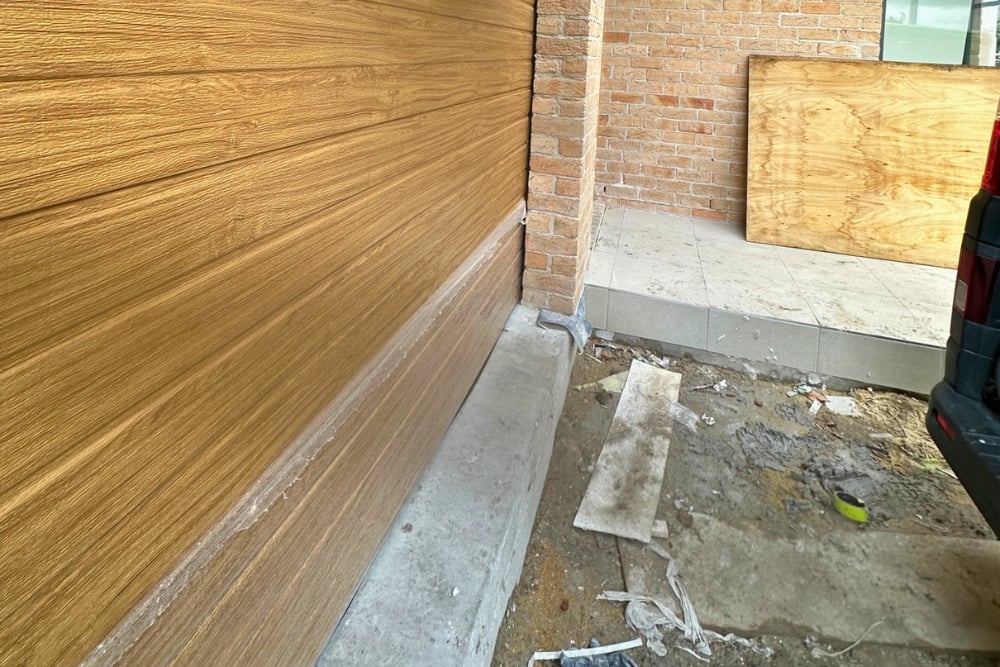
- Timber-look or timber composite: 90-130 kg
- Aluminium frame with glass panels: 80-120 kg
Double garage doors (around 4800mm wide) are roughly double those figures. A large insulated double door can come in at 150-200 kg or more depending on the panel thickness and glazing.
These aren’t exact specs for every product. Your door’s actual weight depends on the manufacturer, panel thickness, hardware, and any custom sizing. But they give you a solid working range for planning purposes.
Why Does It Matter?
A few reasons, actually.
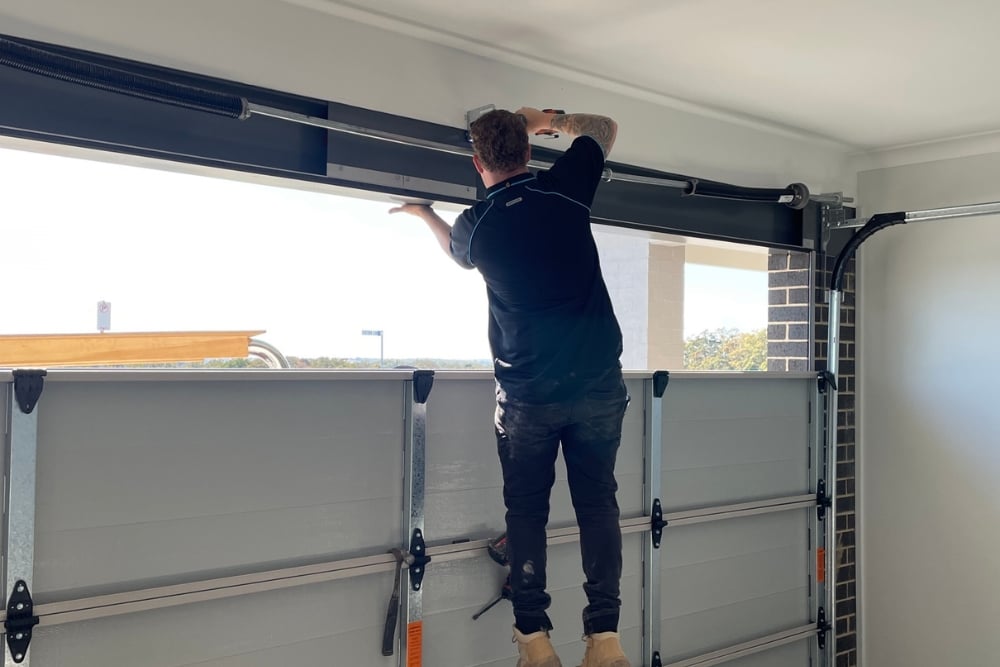
Springs: Your torsion or extension springs are calibrated to counterbalance the door’s weight. Get it wrong and the door either feels impossibly heavy to lift manually, or bounces up too fast. When we install or replace springs, we calculate them specifically for your door’s weight and size.
Opener selection: This is where a lot of people get caught out. A motor rated for a 60 kg door won’t cope well running a 120 kg insulated double every day. It’ll work for a while, but it’s going to wear out faster than it should. Does door weight affect motor performance? This article goes into more detail on this, but the short version is: yes, significantly.
Manual operation: In a power outage, you need to be able to operate the door by hand. A well-balanced door (springs properly set to its actual weight) should lift with one hand and stay up on its own. If yours doesn’t, that’s worth sorting out regardless of what motor you’re running.
What Makes Sectional Doors Heavier or Lighter?
Panel thickness is the biggest factor. A 40mm insulated panel weighs noticeably more than a single-skin 0.5mm steel panel, and it should, because it’s doing more work thermally.
Material choice matters too. Timber composite doors look great but add real weight. Aluminium is lighter than steel for the same panel size, but if you’ve got glazing (glass or polycarbonate panels), that adds up quickly.
Hardware contributes more than people expect. Tracks, hinges, rollers, and bottom brackets on a large door can add 15-20 kg before you’ve even counted the panels.
And finally Size. Obviously. A 3000mm wide door weighs considerably more than a 2400mm door in the same style, even if the height is identical.
Insulated Doors and What You Should Know
Insulated sectional doors have become really popular around the Lake Macquarie and Hunter Valley area, partly for comfort (garages used as workshops or home gyms), partly for energy efficiency, and partly because they just feel more solid.
The trade-off is weight. A quality foam-injected insulated panel is going to add 20-40% to your door’s overall weight compared to a single-skin equivalent. That’s not a problem if your springs and opener are matched to it, but it’s worth knowing this information beforehand.
When looking at insulated sectional garage doors, make sure you’re also having a conversation about whether your existing motor will be able to accommodate any changes in weight.
Do insulated doors require stronger openers? covers this in more detail. The quick answer is that it depends on the motor rating and the door size. Not always, but often enough that it’s worth checking.
How Door Weight Affects Your Motor Choice
This question is asked a lot when people are looking to upgrade to an insulated door and want to keep their existing opener. Sometimes it works fine. Sometimes it doesn’t.
Opener motors are rated by door weight (in kg) and sometimes by door size or ‘equivalent door area’. A motor suited to a lightweight single door isn’t the right tool for a heavy insulated double, even if it can physically move it. Running a motor at or above its rated capacity shortens its life and increases the chance of safety issues.
Our full garage door openers guide covers motor selection in detail, including what the ratings mean, how to match a motor to your door, and what to look for in terms of features. Worth a read if you’re shopping for a new opener or wondering whether your current one is appropriate for your door.
How to Find Out What Your Door Actually Weighs
If you’ve got an existing door and you need the actual number, say for spring replacement or opener selection, the best approach is to check the manufacturer’s documentation for your specific door model, or call us and we can help work it out.
Guessing is fine for rough planning. But when it comes to spring tension and motor ratings, getting the actual figure right matters.
If you’re buying new, we’ll spec the right springs and opener to match whatever door you choose. That’s just part of the installation process.
Any Questions?
Give us a call on 02 4955 3332 or send us an enquiry. We’re based in Cameron Park and work across Lake Macquarie, Newcastle, the Hunter Valley, Port Stephens, and the Central Coast. We are happy to talk through door options, weights, and what motor will suit your situation.